phone icon in white color

Call Us

Book Free Appointment

USFDA Approved Procedures

USFDA Approved Procedures

Minimally invasive. Minimal pain*.

Minimally invasive. Minimal pain*.

Insurance Paperwork Support

Insurance Paperwork Support

1 Day Procedure

1 Day Procedure

Top Doctors for Thyroid Removal in Chennai

About Thyroidectomy

A thyroidectomy is the surgical removal of the thyroid gland (partial or total) for a variety of reasons such as thyroid nodules, hyperthyroidism, etc. The amount of thyroid tissue to be removed depends on the severity and the nature of the thyroid disease. The thyroid gland is a small butterfly-shaped gland at the base of the neck that controls the metabolism. Hence, thyroid diseases can wreak havoc on the entire body if not treated properly in time. While for some thyroid issues such as Graves’ disease, hyperthyroidism, etc., medical management is possible in mild cases, for others such as thyroid nodules, thyroid cancer, etc., immediate surgical management is preferred. At Pristyn Care, you can consult the best ENT specialists in Chennai for expert consultation and treatment regarding thyroid issues.

Overview

Types of thyroidectomy
  • Conventional thyroidectomy
  • Transoral thyroidectomy
  • Endoscopic thyroidectomy
Types of thyroidectomy based on thyroid tissue removal
  • Total thyroidectomy (TT)
  • Subtotal thyroidectomy (STT)
  • Thyroid lobectomy (Hemithyroidectomy)
  • Thyroid isthmusectomy
Recovery period for thyroidectomy
  • Hospitalization: 1-2 days
  • Resume work: 5-6 days
  • Perform strenuous exercise and activity: 10-14 days
  • Total recovery: 3-4 weeks
Risks of delaying thyroidectomy
  • Graves’ disease
  • Thyroid storm
  • Thyrotoxic crisis
  • Metastasis of thyroid cancer
  • Airway obstruction
  • Difficulty in speaking and swallowing , etc.
Facts you should know about thyroidectomy
  • Thyroid cancer can be completely cured through thyroidectomy and radiotherapy.
  • Thyroid disease can occur in people of any age and gender.
  • You may need to take TSH and thyroid hormone supplements for a long time after surgery.
  • Only 5% of thyroid lumps are cancerous.
  • Benign lumps can grow and cause problems like airway obstruction , difficulty in speaking and swallowing, etc.

Thyroidectomy Diagnosis and Procedure

Diagnosis of Thyroid Problems

The diagnosis begins with a proper medical history to determine the cause of the disease. Once the history is taken, the doctor will perform several diagnostic tests to determine the exact nature of the disease.
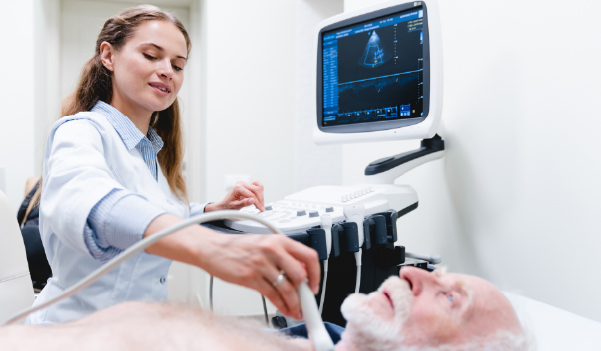
  • Physical examination: The ENT surgeon will palpate the neck and throat region to see if you have a goiter or swollen lymph nodes.
  • Blood tests: Blood tests to measure thyroxine (T4 hormone) and thyroid-stimulating hormone (TSH) can help confirm a thyroid disorder diagnosis.
  • Radioiodine uptake test: This test is used to determine how much iodine our thyroid gland absorbs by having the patient consume radioactive iodine orally.
  • Thyroid scan: This procedure involves injecting radioactive iodine into the patient’s bloodstream in order to see the amount of iodine uptake by the gland and determine whether the patient has thyroid issues such as hyperthyroidism, cancer, or other growths.
  • Thyroid ultrasound: Ultrasounds are extremely useful for imaging thyroid problems in patients where radioactive exposure is prohibited, such as pregnant women, developing children, etc.
  • Tissue biopsy: If the patient has suspicious nodules/growths on the thyroid gland, a fine-needle aspiration biopsy may be performed to extract thyroid gland tissue to determine if the patient has thyroid cancer.
Read More
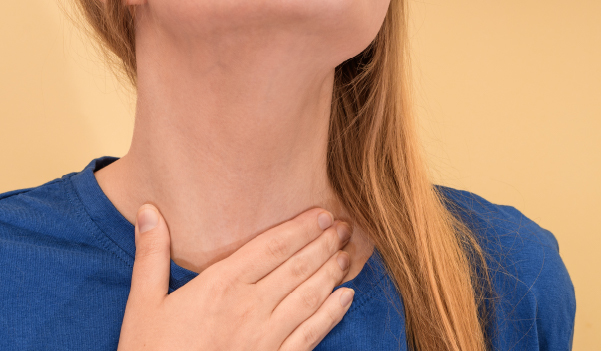
Woman with an enlarged thyroid gland

Thyroidectomy procedure

Depending on the cause and severity of the symptoms and the patient’s and surgeon’s preference, the surgeon will determine the amount of the thyroid tissue to be removed. Types of surgical techniques for thyroidectomy are:

  • Open/conventional thyroidectomy: It used to be the most common approach for thyroid surgery. The surgeon makes a neck incision to gain direct access to the thyroid gland.
  • Transoral thyroidectomy: For transoral thyroidectomy, the surgeon does not make an external incision. Thus it is more pleasing aesthetically for most patients.
  • Endoscopic thyroidectomy: It is a minimally invasive procedure in which the surgeon makes small incisions in the neck and inserts surgical instruments (including a small endoscope) through these incisions.
Read More

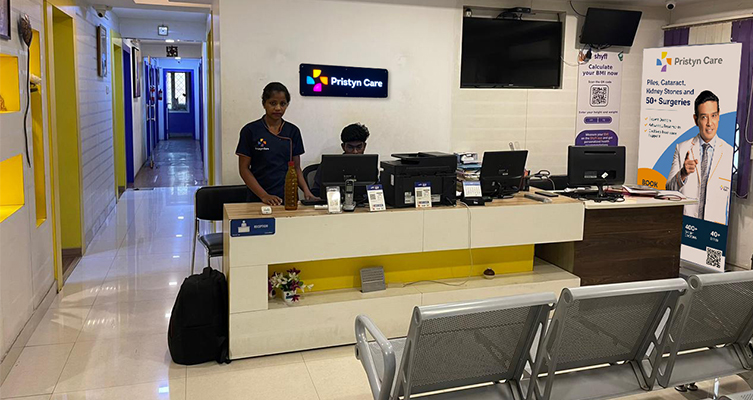
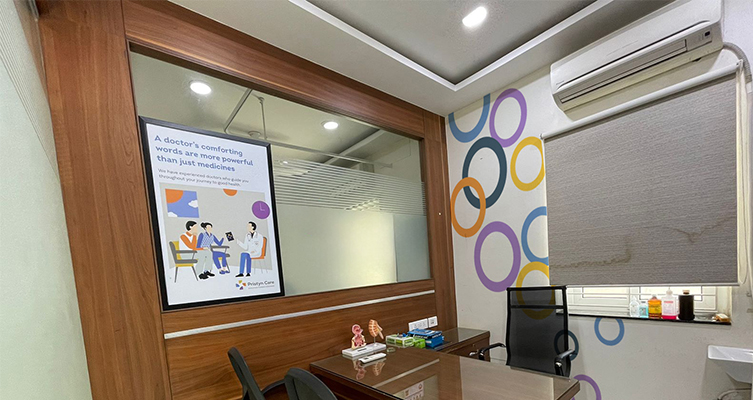
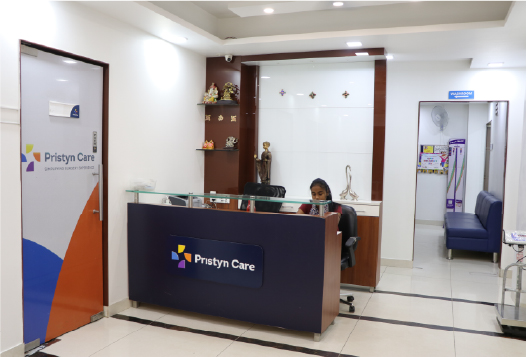
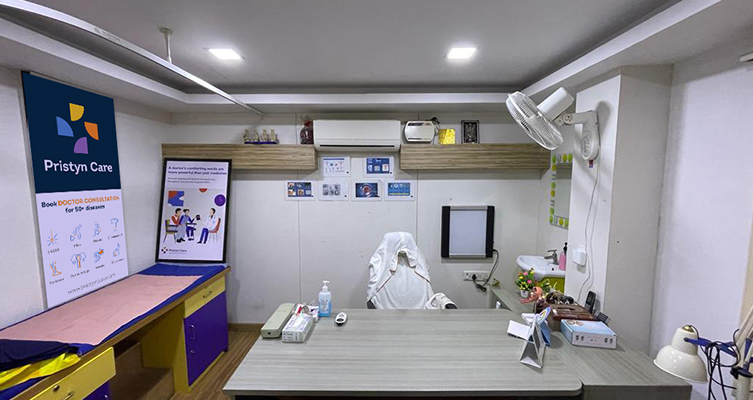
Our Clinics in Chennai

clinic_image
Pristyn logo Pristyn Care
map icon Chennai , Tamil Nadu
No 237, Kilpauk Garden Road, Kilpauk

Why Choose Pristyn Care For In Thyroidectomy?

Best ENT Clinics For Thyroidectomy

01

Advanced Minimally Invasive Surgery

Pristyn Care is one of the most advanced surgery providers for Thyroidectomy for better results, quick recovery and high success rate without any significant complications.

02

Experienced Ent Surgeons

At Pristyn Care, we have ENT surgeons with 8-10 years of experience in performing advanced Thyroidectomy surgery with successful results.

03

85-90% Success Rate

Thyroidectomy surgery at Pristyn Care has a success rate of at least 85-90%, thanks to our advanced treatment facilities, expert surgeons, and state-of-the-art treatment centers.

04

Consultations with diagnostic endoscopy

At Pristyn Care, you can avail pre and postoperative consultations along with diagnostic endoscopy for diagnostic confirmation and treatment planning. You will also receive follow-up checkups with your ENT surgeon after surgery.

care service Still haven’t found the solution?
phone icon080-6510-5277 Call us now

What are the Risks Associated with Thyroidectomy Surgery?

With the advancement in medicine, thyroidectomy has become a very safe procedure. However, there are some thyroidectomy complications that can still occur, such as:

  • Hemorrhage and infection: Postoperative infections can delay healing and lead to further complications. Make sure there is minimal pain, swelling, warmth, redness, or pus drainage at the surgical site after the surgery.
  • Seroma: Sometimes, there can be fluid collection at the surgical site, known as a seroma. Generally, small seromas disappear on their own but if large, they can cause further delay in healing.
  • Airway obstruction: The trachea may be compressed during the surgery, which may lead to a hematoma formation and airway obstruction if not resolved promptly.
  • Damage to the recurrent laryngeal nerve: Irritation of the recurrent laryngeal nerve is common during a thyroidectomy, but if the nerve is injured, it can lead to a permanently hoarse and weak voice.
  • Low PTH and calcium levels: Low serum calcium and PTH levels are common side effects of thyroid/parathyroid gland removal. To manage this, the patient may have to take supplements for a long time.
Read More
green tick with shield icon
Medically Reviewed By
doctor image
Dr. Dinesh Kumar Amararam
15 Years Experience Overall
Last Updated : December 9, 2025

Frequently Asked Questions

Who are the top doctors for Thyroidectomy treatment in Chennai?

We have several experienced and highly rated doctors for Thyroidectomy in Chennai. Some of our top specialists include: Dr. Dinesh Kumar Amararam (15 Years Experience Overall), etc.

Is thyroidectomy painful?

Thyroidectomy surgery is performed under general anesthesia, so the patient is unconscious during it and does not feel any pain. After the surgery, there may be some pain and discomfort in the neck along with hoarseness of the voice, but they only last for a few days and can be managed using medications.

What are the chances of recurrence of thyroid problems after thyroidectomy?

Yes, thyroid problems can recur, although the likelihood of the thyroid gland growing back or the recurrence of benign/carcinogenic disorders of the thyroid is about 5-20% depending on the disease.

How long will it take to fully recover from a thyroidectomy?

Barring any complications, patients are discharged within 1-2 days of the surgery and they can return to work within a week, but for strenuous physical activity, they should wait for at least 2-3 weeks. Complete recovery can take about 3-4 months.

Why is a partial thyroidectomy preferred over a total thyroidectomy?

Hemithyroidectomy (partial thyroidectomy) is usually preferred over total thyroidectomy as it reduces the patient’s overall need for TSH, thyroxine, and other supplements, however, after a total thyroidectomy, patients need daily hormone supplements to replace the thyroid’s natural function.

How long does it take for a thyroidectomy scar to fade?

Depending on the length of the scar, the surgical technique, and the surgeon’s expertise, the surgical scar from a thyroidectomy usually fades away within 3-6 months

What is the life expectancy of people who’ve undergone a thyroidectomy?

Thyroid removal surgery, even total thyroidectomy, has no effect on life expectancy. While the quality of life of the patient may be slightly lower following the surgery, the after-effects of the treatment are easily manageable through medicines and supplements.

Thyroidectomy Treatment in Top cities

expand icon

Thyroidectomy Surgery Cost in Top Cities

expand icon

Thyroidectomy Treatment in Other Near By Cities

expand icon
Disclaimer: **The result and experience may vary from patient to patient.. ***By submitting the form or calling, you agree to receive important updates and marketing communications.

© Copyright Pristyncare 2025. All Right Reserved.