Chennai

Call Us
Book FREE Appointment
Facing a tough time conceiving naturally? Consult with our highly experienced and trained fertility specialists for free iin Chennai for a thorough consultation for infertility and undergo the best IUI treatment under expert care and guidance.
... Read More




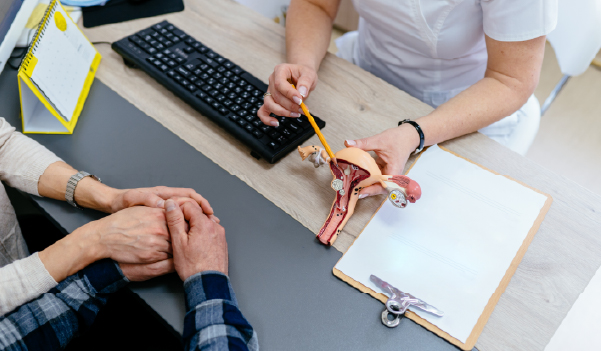
Diagnosis for IUI treatment begins with a thorough evaluation of both partners to determine if they are suitable candidates. For the female partner, tests include hormonal blood work to assess ovulation, pelvic ultrasound to check follicle development, and HSG to examine fallopian tube patency.
The male partner undergoes semen analysis to evaluate sperm count, motility, and morphology. Doctors also review medical history and any underlying conditions. These combined assessments help confirm whether IUI is the appropriate and effective treatment option.
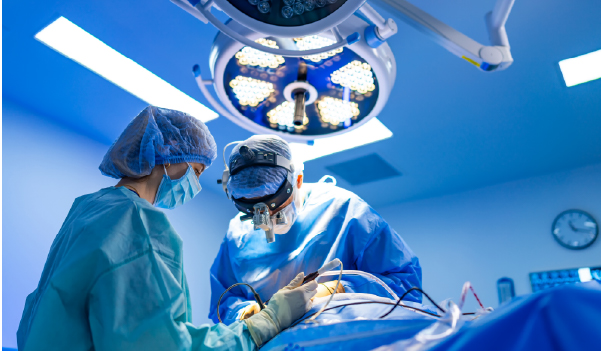
IUI fertility treatment is done at a specialized fertility clinic. If you rely on a sperm donor for the process, the donor sperm will be thawed and prepared. If you are using your partner’s sperm, his semen will first be evaluated.
In the clinic, the semen would go through a ‘washing’ procedure in order to remove all impurities from it, leaving only what is needed to get the female pregnant.
The female would have to lie down on her back, just the way for any cervical/ vaginal exam. The doctor uses a speculum to gently open the vagina. The ‘washed’ semen will then be placed inside the uterus through the catheter. Since the sperm is directly placed inside the uterus, there is no chance of the sperm falling out.
 Pristyn Care
 Chennai , Chennai
 4.5/5
4.5/5 Pristyn CareChennai , Tamil Nadu4.6/5
India's trusted fertility center that provides cost-effective treatment packages.
We provide a free home sample collection facility to save patients from the hassle of commuting to the clinic/hospital. Our executives collect the samples from the patient’s doorstep, and the samples are preserved and deposited for testing/treatment with care.
We ensure 100% confidentiality of the patients throughout the treatment process. All the treatment details and documentation are kept secure, and no information, under any circumstance, is leaked to an outside party.
We have state-of-the-art diagnostic facilities to accurately diagnose the causes of infertility, underlying complications, etc., before suggesting the best treatment plans. An accurate diagnosis is important for ensuring the correct treatment and successful treatment outcomes.
We house expert fertility specialists with ample experience in diagnosing fertility problems and providing IUI treatment. They curate personalized treatment plans for patients, and even help them with follow-up care.
 Still haven’t found the solution?
 080-6510-5277Call us now
IUI (Intrauterine Insemination), in the simplest sense, is to place the concentrated and washed semen directly into a woman’s uterus.
This is why, for it to work, you need three essential factors:
1.Healthy semen
2.Healthy eggs
3.Healthy uterus
This is why, as you prepare for IUI, your infertility specialist consults you to run a few diagnostic tests to specifically understand the health condition of both partners and investigate their family’s medical history. We suggest you and your partner both take these tests simultaneously as they are essential to devise the right fertility plan best suited for you.
Another key factor in IUI is your body weight. Your body weight is a direct result of your hormones, health, and metabolism. And if any of it fluctuates, it affects your ovulation and quality of eggs and sperm production. This is why, if your body weight is not proportional to your height, we suggest you consciously work on it. Include some moderate exercises, slow yoga, and breathing exercises in your everyday life. Switch to a healthier diet and eat at the set and regular intervals. This would not help you achieve a healthy weight, but also train your body to produce the right hormones and fluids at the right time, thus preparing you for pregnancy.
Also, as the base rule, we suggest, the couple quits smoking, drinking, and recreational drugs along with a cut down on caffeinated products and packaged food. These not only affect your fertility but also raise unwanted anxiety and heart palpitations.
Tests advised for male partners before IUI are as follows:
1. Semen analysis – As the name suggests, semen analysis is the lab test of your sperm sample. This is done to understand the health, quality, and motility of your sperm count.
2. Imaging tests – Imagining tests are the tests that use specialized ultra rays to print an internal image of the human body and note down any specific abnormality. For male infertility, these tests typically include ultrasound and MRI of male genital areas.
3. Hormone testing – The hormone testings are done to estimate the balance of testosterone and other male hormones in the male. If need be, your doctor could also refer you to a reproductive endocrinologist for this.
4. Testicular biopsy – In rare cases or for males in their late 40s, a testicular biopsy may be employed. This is done using a tissue sample from the male scrotum. The sample is then sent for a lab test for depth analysis on any particular abnormality or growth of abnormal cells in the male reproductive system.
5. Genetic testing – As the name suggests, genetic testing is used to examine the presence of any contributing genetic defect to the couple’s infertility.
Tests advised for female partners before IUI are as follows:
1. Blood tests – Blood tests are typically the first tests conducted to examine your health history and primary reasons for infertility. These test your hormone and thyroid levels and help filter any abnormalities
2. Imaging tests – Imaging tests such as pelvic ultrasound, MRI, and sonography are the second immediate tests to diagnose female infertility. This helps examine structural abnormalities in the uterus and ovaries of women. If need be, laparoscopy or hysteroscopy may be employed.
3. X-ray hysterosalpingogram (HSG) – HSG test is done to examine any structural blockages in the fallopian tubes. For this, your OB-GYN injects a clinically safe dye inside your cervical opening and monitors its movement through your fallopian tube.
4. Ovulation testing – Ovulation test is a simple blood test done to determine if you are ovulating or not. Based on the same, your OB-GYN puts you on ovulation drugs.
5.Test for ovarian reserve – As the name suggests, ovarian reserve tests help examine the number of eggs available in your ovaries for ovulation. For the same, your doctor does a few hormone testings at the beginning of your menstrual cycle.
6. Endometrial Biopsy – Endometrial biopsy is a definitive test done to check any abnormalities in the endometrial lining of the female uterus. For this, your OBGYN uses a tissue sample of your uterine lining and sends it for a lab test.
We have several experienced and highly rated doctors for IUI Treatment in Chennai. Some of our top specialists include: Dr. Sujatha (23 Years Experience Overall), etc.
There are no physical restrictions after IUI. The patient can carry the daily activities without worry. You might notice some spotting after the process, but that is absolutely normal.
It usually should not be more than 72 hours since his last ejaculation in order to ensure the best motility. If the low sperm count is the reason for IUI, it is generally best to wait 48 hours between ejaculation and sperm collection for the IUI.
Any infertility clinic or IUI lab is as good as its doctors and its technologies. Thus some of the factors you can look at are its board certifications, years of experience, and history of success rates.
Yes, with advancing technologies and increasing awareness, babies born through IUI treatments are just as healthy as any other child born through natural conception methods. However, like any other assisted technology, the treatment requires you to carefully follow all the suggested instructions and remain patient and positive throughout the treatment.
.svg)

Check out our app!


Surgery
Social Media


© Copyright Pristyncare 2026. All Right Reserved.
Avail FREE Doctor Consultation

Consult with our expert surgeon for more than 50+ diseases

Once you share your details, our care coordinator will get in touch with you.

The coordinator will understand your symptoms and health condition in detail.

Your consultation will be scheduled at the earliest.
3M +
Happy Patients
150 +
Clinics
30 +
Cities

120Cr—Patient Savings Delivered
so patients focus on recovery, not bills.

Complete Transparency
No hidden charges or surprise bills

End-to-End Insurance Handling
Complete insurance processing support

Up to 20% Savings on Every Surgery
powered by smarter insurance handling

Easy EMI Options
Flexible payment plans available
120Cr—Patient Savings Delivered
so patients focus on recovery, not bills.
Complete Transparency
No hidden charges or surprise bills
Thanks for booking!
Our care coordinator will call you shortly.
Get much more with Pristyn Care App


Book Slot for Covid Precaution Dose


Access/Share your and family’s Vaccination Certificate anytime


Create your Ayushman Bharat health account


Book Your FREE Consultation
Consult with our expert surgeon for more than 50+ diseases
Once you share your details, our care coordinator will get in touch with you.
The coordinator will understand your symptoms and health condition in detail.
Your consultation will be scheduled at the earliest.
3M +
Happy Patients
150 +
Clinics
30 +
Cities