Delhi

For an accurate calculation, please share a few basic details about yourself.



Healthy BMI range:18.5 kg/m² - 24.9 kg/m²
Healthy weight for the height:59.9 kg - 81 kg
BMI is a measurement of a person's leanness or corpulence based on their height and weight, and is intended to quantify tissue mass. It is widely used as a general indicator of whether a person has a healthy body weight for their height. Specifically, the value obtained from the calculation of BMI is used to categorize whether a person is underweight, normal weight, overweight, or obese depending on what range the value falls between. These ranges of BMI vary based on factors such as region and age, and are sometimes further divided into subcategories such as severely underweight or very severely obese. Being overweight or underweight can have significant health effects, so while BMI is an imperfect measure of healthy body weight, it is a useful indicator of whether any additional testing or action is required. Refer to the table below to see the different categories based on BMI that are used by the calculator.
Read more

With Pristyncare, you can achieve your desired BMI and goals. It's easier than you think!
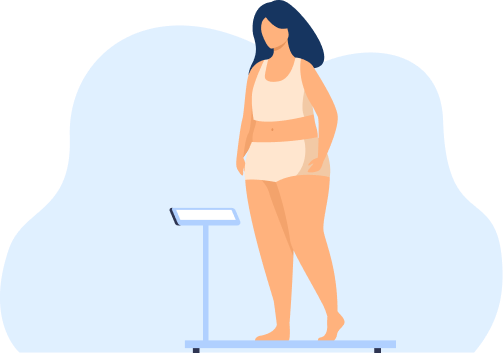
This is the World Health Organization's (WHO) recommended body weight based on BMI values for adults. It is used for both men and women, age 20 or older.
This is a graph of BMI categories based on the World Health Organization data. The colors represent the major BMI categories.


 Important Health Information
Understanding the potential health implications of being outside the healthy weight range

Excess weight increases risk of heart disease, high blood pressure, and stroke

Higher risk of Type 2 diabetes, insulin resistance, and metabolic syndrome

Early awareness and lifestyle changes can significantly reduce health risks
The Centers for Disease Control and Prevention (CDC) recommends BMI categorization for children and teens between age 2 and 20.


Being overweight increases the risk of a number of serious diseases and health conditions. Below is a list of said risks, according to the Centers for Disease Control and Prevention (CDC):
 High blood pressure Higher levels of LDL cholesterol (bad cholesterol), lower levels of HDL cholesterol (good cholesterol in moderation), and high levels of triglycerides Type II diabetes Coronary heart disease Stroke Gallbladder disease Osteoarthritis, a type of joint disease caused by breakdown of joint cartilage Sleep apnea and breathing problems Certain cancers (endometrial, breast, colon, kidney, gallbladder, liver) Low quality of life Mental illnesses such as clinical depression, anxiety, and others Body pains and difficulty with certain physical functions Generally, an increased risk of mortality compared to those with a healthy BMI
The BMI is calculated using the following formula:
BMI = (weight in kilograms) / (height in meters)2
Here's how you can calculate your BMI using the metric system:
1. Measure your weight in kilograms (kg).
2. Measure your height in meters (m).
3. Square your height in meters (height)2.
4. Divide your weight in kilograms by the squared height in meters (weight / height)2
The resulting value is your BMI. It's a numerical representation of your body weight in relation to your height, and it's used to classify individuals into different weight categories, such as underweight, normal weight, overweight, and various degrees of obesity.
The BMI (Body Mass Index) formula itself is the same for both men and women. It's a simple mathematical calculation based on a person's weight and height. However, when interpreting BMI values, it is important to note that men and women may have different average body compositions. Men and women typically differ in terms of muscle mass, fat distribution, and other physiological factors. As a result, the same BMI value may have slightly different implications for men and women.
Age, sex, and muscle mass can impact the relationship between BMI and body fat. In addition, BMI does not differentiate between excess fat, muscle, or bone mass nor provides any indication of fat distribution among people.
No, BMI is calculated on the basis of height and weight of the individual and does not take into account the body shape or frame size.
BMI provides a general idea of whether the individual is underweight, normal weight, or overweight. It does not give any specific guidance about how much weight should be reduced. It is best to consult with a healthcare professional for personalized advice.
The time taken by each individual to reduce the BMI varies on factors like the starting weight, diet, exercise, and the overall health. It is majorly important to focus on sustainable, healthy habits rather than the time period.
Body mass index or BMI is not a complete accurate value as it only measures the body weight instead of the excess body fat. BMI is a useful tool to check the health of the individual but not the sole measurement scale

Call Us
Book Appointment
Talk to an Expert for Free

Consult with our expert surgeon for more than 50+ diseases

Once you share your details, our care coordinator will get in touch with you.

The coordinator will understand your symptoms and health condition in detail.

Your consultation will be scheduled at the earliest.
3M +
Happy Patients
150 +
Clinics
30 +
Cities
Choose Time Slot ?
Just choose your preferred time-slot from the below options.
We will call you back at your preferred time.
10AM - 12PM
12PM - 2PM
2PM - 5PM
Download Pristyn Care app to do much more


Book Slot for Covid Precaution Dose


Access/Share your and family’s Vaccination Certificate anytime


Create your Ayushman Bharat health account