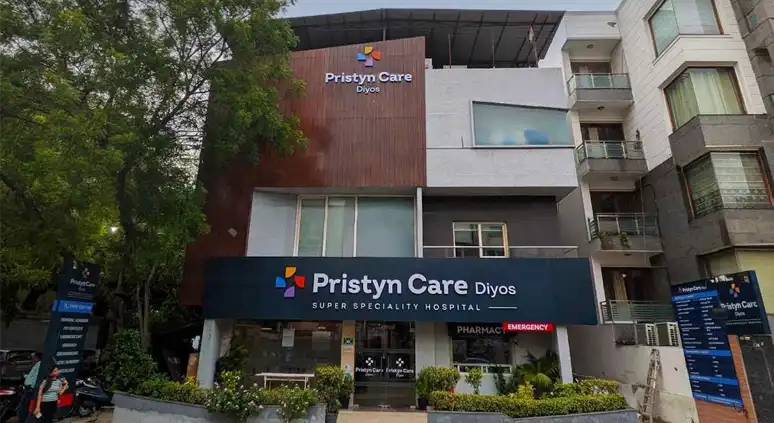
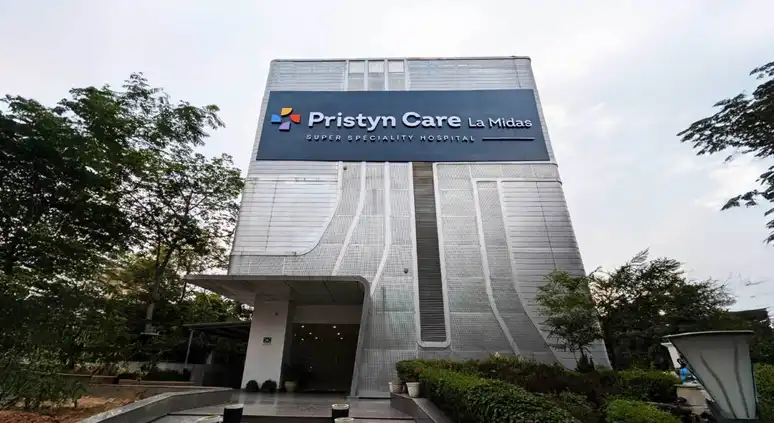
Delhi


USFDA-Approved Procedure

Patient Centric Approach

1-day Hospitalization

Cost Effective Treatment

We at Pristyn Care Perform 4 types of treatment as follows:
A small incision is made inside the cheek to avoid external scars. A controlled stitch connects the dermis to the cheek muscle, creating a tether that indents when smiling. Depth and position are customized with preoperative marking and intraoperative smile checks. Swelling settles in one to two weeks, and the dimple often appears static early, then becomes more “smile-dependent” as healing relaxes the tether. Results are long lasting with natural animation.
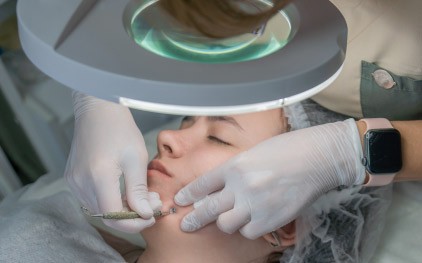
For patients wanting a central chin indentation, a short intraoral or submental approach is used to sculpt a subtle depression over the bony symphysis. A suture or small pocket is fashioned to maintain the dimple while preserving external contour. Careful alignment with the vertical facial midline is crucial. Recovery is similar to cheek dimpleplasty, with soft diet, antiseptic rinses, and limited strenuous movement for several days. Outcome is durable and customizable.
In select cases, a percutaneous or intraoral suture can create a temporary-to-semi-permanent dimple without tissue excision. The technique tethers skin to muscle with a precisely tensioned knot, allowing assessment of depth during the procedure. It offers shorter downtime and reversibility but may relax faster than surgical methods. Ideal for patients testing the aesthetic before committing. Follow-ups adjust tension or convert to surgical fixation if needed.
If a previously created dimple is too deep, asymmetric, or persists when not smiling, revision addresses the tether. Techniques include releasing the scar band, redistributing soft tissue, and re-suspending for symmetry, or fully reversing by freeing adhesions and closing the pocket. Meticulous intraoral work minimizes external marks. Postoperative massage and monitoring help prevent re-tethering. Revision planning includes photographic analysis and bite-line mapping for accuracy.
A small incision is made inside the cheek to avoid external scars. A controlled stitch connects the dermis to the cheek muscle, creating a tether that indents when smiling. Depth and position are customized with preoperative marking and intraoperative smile checks. Swelling settles in one to two weeks, and the dimple often appears static early, then becomes more “smile-dependent” as healing relaxes the tether. Results are long lasting with natural animation.
For patients wanting a central chin indentation, a short intraoral or submental approach is used to sculpt a subtle depression over the bony symphysis. A suture or small pocket is fashioned to maintain the dimple while preserving external contour. Careful alignment with the vertical facial midline is crucial. Recovery is similar to cheek dimpleplasty, with soft diet, antiseptic rinses, and limited strenuous movement for several days. Outcome is durable and customizable.
In select cases, a percutaneous or intraoral suture can create a temporary-to-semi-permanent dimple without tissue excision. The technique tethers skin to muscle with a precisely tensioned knot, allowing assessment of depth during the procedure. It offers shorter downtime and reversibility but may relax faster than surgical methods. Ideal for patients testing the aesthetic before committing. Follow-ups adjust tension or convert to surgical fixation if needed.
If a previously created dimple is too deep, asymmetric, or persists when not smiling, revision addresses the tether. Techniques include releasing the scar band, redistributing soft tissue, and re-suspending for symmetry, or fully reversing by freeing adhesions and closing the pocket. Meticulous intraoral work minimizes external marks. Postoperative massage and monitoring help prevent re-tethering. Revision planning includes photographic analysis and bite-line mapping for accuracy.
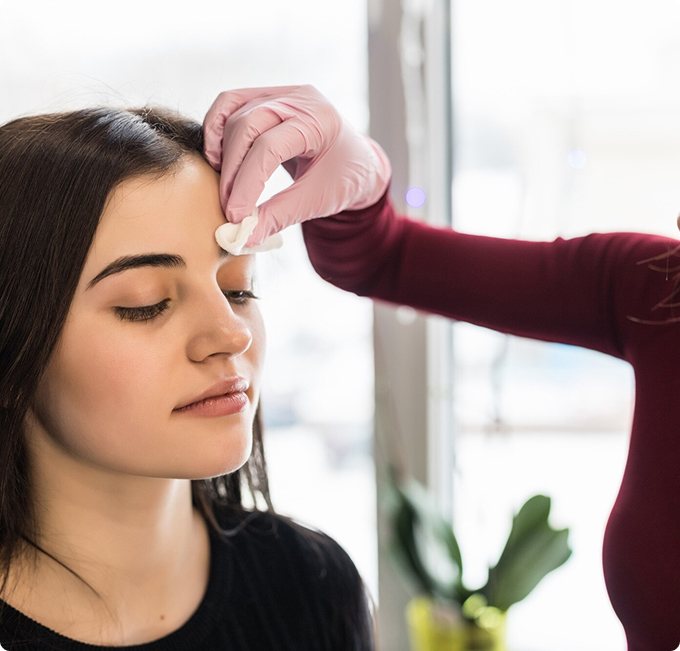
As we age, our face begins to show signs of time - wrinkles, sagging skin and volume loss. Many people turn to Mesotherapy to refresh their appearance and feel more confident. We have divided the face into three key areas:





.png)

 Still haven’t found the solution?
The cuts are made inside your mouth, which means there won’t be any visible scars on your skin.
Absolutely! It’s suitable for almost anyone, regardless of cheek structure even if you have chubby cheeks.
After surgery, you’ll need to use an antiseptic mouthwash and take antibiotics as prescribed to prevent infection and help with healing.
Initially, dimples might appear even without smiling, but within weeks they become more natural-looking and only show when smiling or moving facial muscl
The ideal age for this procedure is typically 18 years and older, as patients should be fully developed and able to provide informed consent.
Yes, once everything heals up, the dimples become a permanent feature of your face.
The dimple creation surgery cost ranges between INR 55,000 and INR 65,000 per dimple. It depends on where you are and who your surgeon is.
You can generally get back to your usual routine within a few days, but try to avoid too much physical activity initially.
Reversing surgically created dimples might be possible depending on how they were made. It’s important to discuss this option with the surgeon before proceeding.
Yes, many patients choose to combine dimple creation with other cosmetic procedures, such as cheek augmentation or facial fillers, for enhanced results.


Dimple creation surgery is becoming a popular cosmetic procedure to create dimples on the cheeks or chin and enhance one’s appearance. To determine if someone is a good candidate for this surgery, several criteria must be met:
Before undergoing dimple creation surgery, the doctor will conduct several important examinations to ensure you are a suitable candidate:
Preparation is key for a smooth dimple creation surgery experience. Here’s how you can get ready:
After your dimple creation surgery, there are specific steps you should follow to ensure optimal healing:
.svg)

Check out our app!


Social Media










.jpg/1711807794014_ban-Icon.png)




_11zon-ca864071060981e9.jpg)