Kolkata

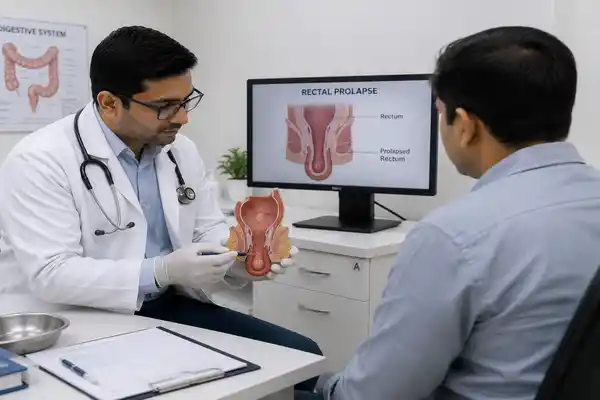
The diagnosis of rectal prolapse typically begins with a detailed medical history review and physical examination. Additional diagnostic tests may be recommended to confirm the condition, evaluate its severity, and identify any associated colorectal or pelvic floor disorders.
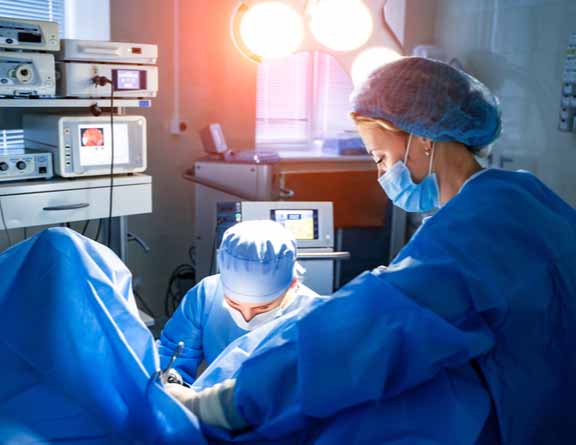
Surgery is considered the most effective treatment for rectal prolapse, especially when symptoms are persistent or severe. The primary goal of surgery is to restore the rectum to its normal position and improve bowel function. The most suitable procedure depends on factors such as age, overall health, and the severity of the prolapse.
 Pristyn Care
 New town , Kolkata
 4.6/5
4.6/5 Pristyn Care Kolkata , West Bengal 4.5/5
Delivering Seamless Surgical Experience in India
Your safety is taken care of by thermal screening, social distancing, sanitized clinics and hospital rooms, sterilized surgical equipment and mandatory PPE kits during surgery.
A dedicated Care Coordinator assists you throughout the surgery journey from insurance paperwork, to free commute from home to hospital & back and admission-discharge process at the hospital.
Our surgeons spend a lot of time with you to diagnose your condition. You are assisted in all pre-surgery medical diagnostics. We offer advanced laser and laparoscopic surgical treatment. Our procedures are USFDA approved.
We offer free follow-up consultations and instructions including dietary tips as well as exercises to every patient to ensure they have a smooth recovery to their daily routines.
 Still haven’t found the solution?
Rectal prolapse and hemorrhoids often cause similar symptoms, including discomfort, bleeding, and tissue protrusion from the anus. However, they are different conditions and require different treatment approaches. An accurate diagnosis by a colorectal surgeon or proctologist is essential to determine the underlying cause of symptoms.
Rectal prolapse surgery is generally safe and effective. However, as with any surgical procedure, there are certain risks and potential complications that patients should understand before treatment.
Most patients recover successfully after rectal prolapse surgery, especially when the procedure is performed by an experienced surgeon and appropriate post-operative instructions are followed carefully.
| Sr.No. | Doctor Name | Registration Number | Ratings | Experience | Book Appointment |
|---|---|---|---|---|---|
| 1 | Dr. Soham Bhattacharjee | 80339 | 4.5 | 12 + Years | Book Appointment |
| 2 | Dr. Sankarshan Saha | 80313 | 4.5 | 8 + Years | Book Appointment |
Rectal prolapse majorly causes discomfort to people, but can also lead to other possible complications like difficulty in pooping, ulceration, and bleeding.
Spontaneous and unforced rupture of the rectum due to increased intraabdominal pressure is an infrequent complication of rectal prolapse in adults.
Rectal prolapse can look different from person to person. If there is an internal rectal prolapse, the rectum begins to slip partway into the anus. In the case of mucosal prolapse, the inner mucous lining of the rectum spins inside out and begins to peak out of the anus. External prolapse happens when the complete rectum falls out.
Rectal prolapse surgery has a high success rate for prolapse control, approximately 75%, and incontinence is improved in 60% of patients. In addition, recurrence of rectal prolapse after surgery occurs in just about 2% to 5% of people.
.svg)

Check out our app!


Social Media