indiatreatment
Pristyn Care Logo
Select City Sidebar Icon
Select City
Pristyn Care Logo
Select city location icon
Select City
location
Get my Location
search icon
percutaneous-drainage
phone icon in white color

Call Us

Book FREE Appointment

Home > Percutaneous Drainage

Percutaneous Drainage Treatment

Percutaneous drainage treatment offers a minimally invasive solution to effectively manage and alleviate complications from fluid collections, such as abscesses, within the abdomen or other body areas. Utilising advanced imaging technology, this procedure allows for precise targeting and removal of fluid without the need for traditional surgery. If you are struggling with persistent infections or other related health issues that require fluid drainage, turn to Pristyn Care’s skilled specialists.

Percutaneous drainage treatment offers a minimally invasive solution to effectively manage and alleviate ...complications from fluid collections, such as abscesses, within the abdomen or other body areas. Utilising advanced imaging technology, this procedure allows for precise targeting and removal of fluid without the need for traditional surgery. If you are struggling with persistent infections or other related health issues that require fluid drainage, turn to Pristyn Care’s skilled specialists.Read More

anup_soni_banner
💯 No Booking Fees
Book FREE Doctor Appointment
Close popup icon
cost calculator
Anup Soni - the voice of Pristyn Care pointing to download pristyncare mobile app
Name
i
i
Phone
+91
i
City
i
Call Us
Call icon
We are Rated
3 M+Happy Patients
200+Hospitals
30+Cities

To confirm your details, please enter OTP sent to you on *

i

3M+

Happy Patients

50+

Disease

200+

Hospitals

30+

Cities

Free Cab Facility

Free Cab Facility

No-Cost EMI

No-Cost EMI

Support in Insurance Claim

Support in Insurance Claim

1-day Hospitalization

1-day Hospitalization

USFDA-Approved Procedure

USFDA-Approved Procedure

What Is Percutaneous Drainage Treatment?

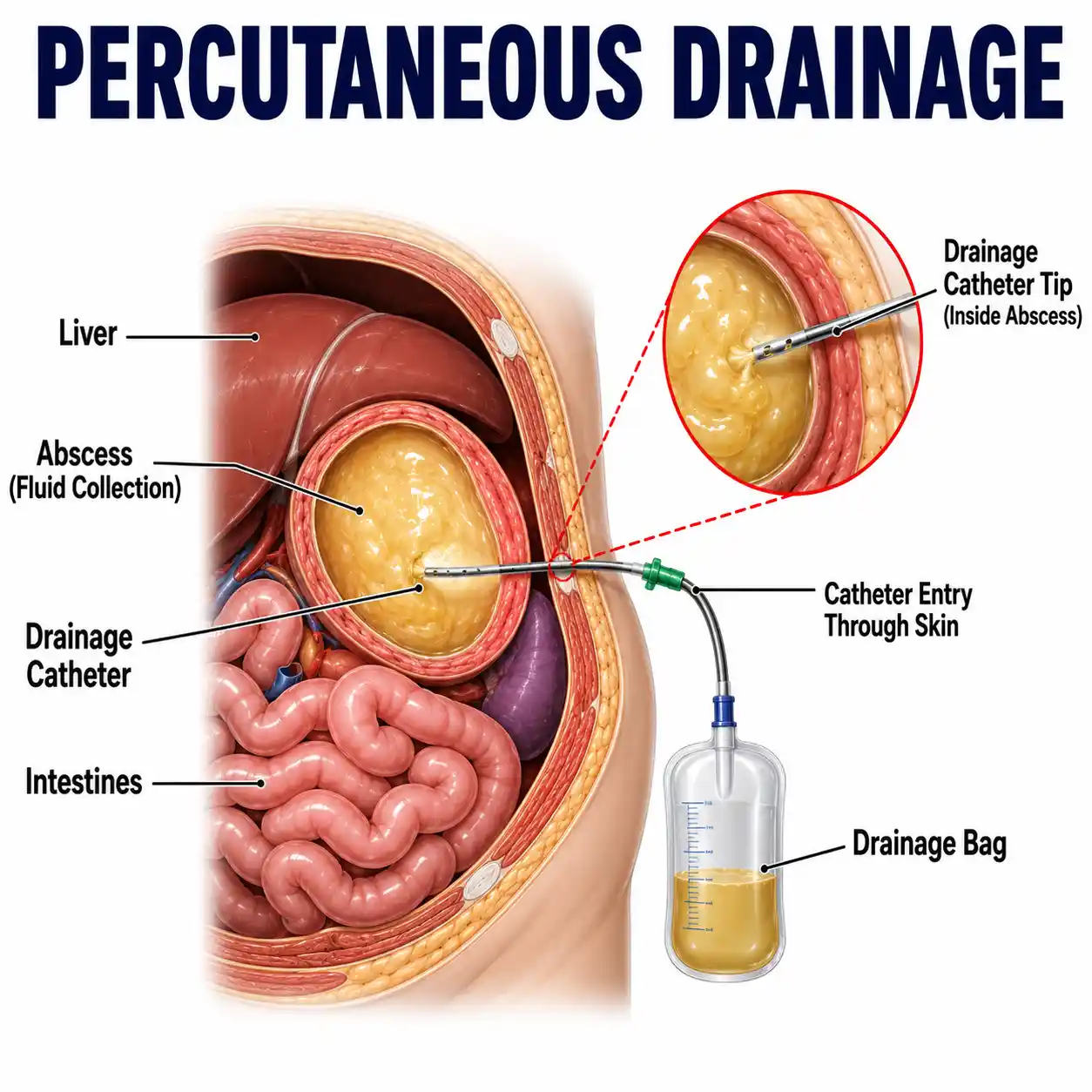
Percutaneous drainage is a targeted medical procedure to remove infected fluid collections from the abdomen. An interventional radiologist, who specialises in such minimally invasive techniques, typically performs this treatment. They use imaging technology to accurately place a needle and a tube into the fluid collection, allowing the infected material to be drained out safely. 

This procedure is essential when infections do not improve with antibiotics alone, and the presence of fluid poses a significant health risk. The main benefits of percutaneous drainage include reduced recovery time, less pain compared to traditional surgery, and a shorter hospital stay. This effective method quickly relieves symptoms and promotes healing, making it a crucial treatment for managing abdominal infections.
percutaneous-drainagepercutaneous-drainage
cost calculator

Free Hernia Surgery Cost Calculator

Fill details to get actual cost

i
+91
i
i

To confirm your details, please enter OTP sent to you on *

i

Types Of Percutaneous Drainage Treatment

Percutaneous drainage is a key treatment for removing infected fluid from the body with minimal surgical intervention. Here are the two commonly used techniques in this percutaneous drainage procedure:

  • Seldinger Technique: This method involves inserting a guide wire into the target area under imaging guidance, followed by a series of dilators to widen the path for a drainage catheter. It is preferred for accessing deeper or more complex abscesses because of its precision and safety.
  • Trocar Technique: In this approach, a sharp, pointed instrument called a trocar is used to puncture the skin and directly place the drainage catheter. This method is typically faster and used for larger, easily accessible abscesses.

Diagnosis Before Percutaneous Drainage Treatment

Before undergoing percutaneous drainage, accurate diagnosis is crucial to determine the necessity and approach for the procedure. Diagnosis typically involves:

  • Imaging Tests: Ultrasound, CT scans, and MRI are the primary tools used to locate and assess the abscess. These imaging techniques help in confirming the presence of fluid, determining its nature, and planning the procedure.
  • Laboratory Tests: Blood tests, including white blood cell count, are used to confirm infection. Cultures may also be taken to identify the specific bacteria causing the infection, guiding antibiotic treatment.
  • Physical Examination: A thorough physical examination helps to assess the patient’s general health and identify signs of infection or other related complications.

Procedure For Percutaneous Drainage Treatment

Percutaneous drainage is a preferred alternative to open surgery due to its reduced recovery time and minimal discomfort. Here are the steps of the percutaneous drainage procedure:

  • Patient Preparation: The patient is positioned comfortably and the area for the procedure is cleaned and shaved if necessary. Local anaesthesia is applied to numb the area.
  • Imaging and Access: Using image-guided fluid drainage technology, such as ultrasound or CT scanning, the physician locates the fluid collection. A small incision is then made on the skin.
  • Catheter Insertion: Depending on the chosen method (Seldinger or Trocar), a catheter or needle is carefully inserted into the fluid collection. In the Seldinger technique, a guidewire is placed first, followed by the catheter.
  • Drainage: The fluid begins to drain through the catheter, which may be connected to a suction device or bag to aid the drainage process. The amount of fluid removed and the speed of drainage are closely monitored.
  • Monitoring and Adjustment: The catheter position may be adjusted based on the amount of fluid draining and imaging results. Additional imaging helps ensure all fluid has been removed.
  • Catheter Removal and Closure: Once the drainage is complete and the infection is under control, the catheter is removed. The incision site is then cleaned and closed with a small bandage.

This procedure is effective for those who require non-surgical infection treatment and offers a faster recovery compared to traditional surgical methods.

Pristyn Care’s Free Post-Operative Care

Diet & Lifestyle Consultation

Post-Surgery Follow-Up

Free Cab Facility

24*7 Patient Support

Who Is The Right Candidate For Percutaneous Drainage Treatment?

Percutaneous drainage is a valuable treatment option for patients with fluid collections due to infection or inflammation. Identifying the right candidates is crucial for the success of this procedure. Here are the criteria for patient eligibility:

  • Presence of Fluid Collections: Ideal candidates have an identifiable fluid collection that can be accessed safely with imaging guidance, such as an abdominal abscess drainage.
  • Response to Other Treatments: Patients who have not responded adequately to antibiotic therapy or those for whom traditional surgery poses too high a risk.
  • Overall Health: Suitable candidates should be stable enough to undergo the procedure with minimal risk. Patients with severe health issues or poor prognosis may not be ideal candidates.
  • Infection Symptoms: Candidates often exhibit symptoms of an infection, such as fever, pain, or elevated white blood cell count, which correlates with the presence of an abscess or fluid collection.

Benefits Of Percutaneous Drainage Treatment

Percutaneous drainage is increasingly recognised as a best drainage method for abscess due to its effectiveness and minimal invasiveness. Here are the key benefits:

  • Reduced Surgical Risk: This technique involves smaller incisions compared to traditional surgery, significantly reducing the risk of complications such as infections and bleeding.
  • Quicker Recovery: Patients generally experience a quicker recovery time, returning to normal activities sooner than those undergoing conventional surgery.
  • Less Pain: The procedure is less painful post-operatively, requiring fewer pain medications, which minimises potential side effects from pain management treatments.
  • Short Hospital Stay: Often, the procedure can be performed on an outpatient basis, which reduces or eliminates the need for an extended hospital stay.
  • High Success Rate: Percutaneous drainage effectively resolves fluid collections and abscesses, with a high success rate in alleviating the condition.
  • Cost-Effective: With shorter hospital stays and fewer complications, the treatment is more cost-effective compared to traditional surgical interventions.

How To Prepare For Percutaneous Drainage Treatment?

Preparation for the percutaneous drainage procedure is straightforward but crucial for ensuring its success. Here is how to prepare:

  • Medical Evaluation: Undergo a thorough medical evaluation, including blood tests and imaging studies, to map the area for drainage.
  • Medication Review: Discuss all medications with the healthcare provider, as some may need to be adjusted or stopped temporarily.
  • Fasting: Typically, patients are required to fast for several hours before the procedure to prevent any complications from sedation.
  • Arrange Transportation: Since sedatives or anaesthesia may be used, arrange for someone to drive you home post-procedure.
  • Clothing and Personal Items: Wear comfortable clothing and leave valuables at home on the day of the procedure.

Recovery Tips and Precautions To Follow After Percutaneous Drainage Treatment

After percutaneous drainage, recovery is generally smooth, but following specific tips can help guarantee a successful outcome:

  • Monitor the Drainage Site: Keep an eye on the catheter site for signs of infection or unusual discharge.
  • Activity Restrictions: Avoid strenuous activities and lifting heavy objects for a specified period to prevent complications.
  • Hydration and Nutrition: Stay hydrated and eat a balanced diet to aid the healing process.
  • Pain Management: Follow the doctor’s instructions for pain management to stay comfortable and promote healing.
  • Follow-Up Appointments: Attend all scheduled follow-up appointments to monitor progress and remove the catheter when advised.
  • Watch for Symptoms: Be alert for fever, increased pain, or other symptoms that could indicate a problem.

Complications Associated With Percutaneous Drainage Treatment

While the percutaneous drainage procedure is generally safe and effective, like all medical interventions, it carries potential risks and complications. Here are the main concerns to consider:

  • Infection: Despite the sterile technique, there is a small risk of introducing or spreading infection within the drainage site.
  • Bleeding: Minor bleeding is common, but significant bleeding may occur, especially if the needle inadvertently damages a blood vessel.
  • Injury to Surrounding Organs: There is a risk of accidental injury to nearby organs or structures during needle insertion, which could require further treatment.
  • Catheter Issues: Problems with the catheter, such as blockage or accidental displacement, can occur, potentially requiring reinsertion or additional procedures.
  • Incomplete Drainage: Sometimes, not all the infected fluid can be removed, which might necessitate repeated drainage or alternative treatments.
  • Allergic Reaction: Rarely, patients may have an allergic reaction to the contrast dye used in imaging during the procedure.
  • Scarring: As with any procedure that penetrates the skin, there is a potential for scarring at the insertion site.

Frequently Asked Questions

What is percutaneous drainage?

Percutaneous drainage is a minimally invasive procedure used to remove fluid collections, such as abscesses or infected fluid, from the body. Using imaging guidance like ultrasound or CT scans, a doctor inserts a needle and a catheter directly into the fluid collection to drain it effectively. This approach is often preferred because it reduces recovery time, decreases the risk of complications, and generally does not require a hospital stay.

What is the difference between percutaneous and surgical drainage?

The main difference between percutaneous and surgical drainage is the level of invasiveness. Percutaneous drainage involves using a needle and a catheter to remove fluid through a small incision under imaging guidance, which is less invasive and usually performed under local anaesthesia. Surgical drainage is more invasive, typically requires general anaesthesia, and involves larger incisions, which may lead to longer recovery times and increased risks.

What are the risks of percutaneous drainage?

The risks of percutaneous drainage include infection, bleeding, injury to nearby organs or structures, catheter-related issues like blockage or displacement, incomplete drainage requiring further intervention, allergic reactions to contrast materials used in imaging, and scarring at the needle insertion site. While these complications are relatively rare, they are important considerations for patient and physician before proceeding with the procedure.

What is the success rate of percutaneous drainage?

The success rate of percutaneous drainage is generally high, particularly for abscesses and fluid collections that are well-defined and accessible. Success depends on several factors including the nature of the fluid collection, the precision of the technique, and the patient’s overall health. When performed by experienced practitioners, percutaneous drainage often resolves the fluid collection without needing further invasive treatment.

What is the recovery time for percutaneous drainage?

Recovery time for percutaneous drainage can vary but is typically short. Most patients can resume normal activities within a few days following the procedure. The exact recovery duration depends on the size and location of the drained fluid, the patient’s overall health, and how well they follow post-procedure care instructions.

What are the side effects of percutaneous drainage?

Common side effects of percutaneous drainage include mild pain and discomfort at the insertion site, minor swelling, and bruising. Rarely, patients might experience more significant issues such as persistent pain, infection at the catheter site, or a delayed allergic reaction to the imaging contrast. Most side effects are temporary and manageable with medications or simple care techniques.

Is percutaneous drainage painful?

Percutaneous drainage is typically performed under local anaesthesia, which numbs the treatment area; therefore, patients usually feel little to no pain during the procedure. Some discomfort or pressure may be experienced as the needle is inserted and the fluid is drained. Post-procedure pain is generally mild and can be effectively managed with over-the-counter pain relievers.

Which abscess cannot be drained?

Abscesses that are not well-defined, are located near vital organs where needle insertion could be risky, or those involving hazardous materials like certain types of chemical abscesses, may not be suitable for percutaneous drainage. Additionally, abscesses that are deeply embedded or intertwined with major blood vessels or nerves often require surgical intervention instead.

Is percutaneous drainage a surgery?

Percutaneous drainage is considered a minimally invasive procedure rather than traditional surgery. It does not involve large incisions or general anaesthesia and is typically performed using local anaesthesia in an outpatient setting. This approach significantly reduces recovery time and the risks associated with larger surgical procedures.

What are the different types of percutaneous drainage?

There are primarily two types of percutaneous drainage techniques: the Seldinger technique and the Trocar technique. The Seldinger technique involves inserting a guidewire into the target area to help place the drainage catheter more accurately, ideal for deeper or smaller fluid collections. The Trocar technique uses a sharp instrument to create a direct pathway for the catheter, suitable for larger and more accessible abscesses.

View more questionsdownArrow
Medical review shield icon

MEDICALLY REVIEWED CONTENT

Dr. Pankaj Sareen
🔍REVIEWED BY
Dr. Pankaj Sareen
MBBS, MS - General Surgery
24 yrs experience
Pristyn Care Team
✍️WRITTEN BY
Pristyn Care Team
Healthcare Expert
Updated On · June 09, 2026
💯 No Booking Fees
Book FREE Doctor Appointment
Close popup icon
cost calculator
Anup Soni - the voice of Pristyn Care pointing to download pristyncare mobile app
Name
i
i
Phone
+91
i
City
i
Call Us
Call icon
We are Rated
3 M+Happy Patients
200+Hospitals
30+Cities

To confirm your details, please enter OTP sent to you on *

i
×
Redirecting to Payment Link, please do not close the browser...

Avail FREE Doctor Consultation

cross icon in white color
Simplifying Surgery Experience

Consult with our expert surgeon for more than 50+ diseases

Next Steps
call icon

Once you share your details, our care coordinator will get in touch with you.

customer care icon

The coordinator will understand your symptoms and health condition in detail.

doctor icon

Your consultation will be scheduled at the earliest.

3M +

Happy Patients

150 +

Clinics

30 +

Cities

or
  • World Class post operative care
  • Advanced Surgical Technologies
  • 120Cr—Patient Savings Delivered

    120Cr—Patient Savings Delivered

    so patients focus on recovery, not bills.

    Complete Transparency

    Complete Transparency

    No hidden charges or surprise bills

    End-to-End Insurance Handling

    End-to-End Insurance Handling

    Complete insurance processing support

    Up to 20% Savings on Every Surgery

    Up to 20% Savings on Every Surgery

    powered by smarter insurance handling

    Easy EMI Options

    Easy EMI Options

    Flexible payment plans available

    120Cr—Patient Savings Delivered

    120Cr—Patient Savings Delivered

    so patients focus on recovery, not bills.

    Complete Transparency

    Complete Transparency

    No hidden charges or surprise bills

    Your Form Has Been Submitted Successfully.

    Our care coordinator will call you shortly.

    Appointment With

    cross icon in white color
    Consultation With Expert Doctors
    Pristyncare's doctor portrait image
    location icon
    Patient Detail
    i
    i
    i
    i
    Proctology
    ","
    Pilonidal Sinus
    ","
    Piles
    ","
    Rectal Prolapse
    ","
    Fissure
    ","
    Fistula
    ","
    Fecal Incontinence
    ","
    Constipation
    ","
    Hemorrhoids
    ","
    Laparoscopy
    ","
    Umbilical Hernia
    ","
    Hydrocele
    ","
    Inguinal Hernia
    ","
    Incisional Hernia
    ","
    Appendicitis
    ","
    Gallstone
    ","
    Hernia
    ","
    Achalasia Cardia
    ","
    Acid Reflux Surgery
    ","
    Large Intestine
    ","
    Indirect Hernia
    ","
    Small Intestine
    ","
    Colonoscopy
    ","
    Gastric Bypass Surgery
    ","
    Gynaecology
    ","
    Pain During Intercourse
    ","
    Vaginoplasty
    ","
    Labiaplasty
    ","
    Vaginal Discharge
    ","
    Laser Vaginal Tightening
    ","
    Vaginal Dryness
    ","
    Ovarian Cyst
    ","
    Hysterectomy
    ","
    Hymenoplasty
    ","
    Clitoral Hoodoplasty
    ","
    Abortion
    ","
    Hysteroscopy
    ","
    Pap Smear
    ","
    Vaginal Rejuvenation
    ","
    Ectopic Pregnancy
    ","
    Laser Vaginal Rejuvenation
    ","
    Vaginal Recurrent Infection
    ","
    Pelvic Pain
    ","
    Female Urinary Problems
    ","
    Lichen Sclerosus
    ","
    Menstrual Disorders
    ","
    Preconception Care
    ","
    Uterine Fibroid
    ","
    Pcos Pcod
    ","
    Pregnancy Care
    ","
    Medical Termination Of Pregnancy
    ","
    Laser Vaginal Bleaching
    ","
    Anal Bleaching
    ","
    Vaginal Wart
    ","
    Molar Pregnancy
    ","
    Bartholin Cyst
    ","
    Miscarriage
    ","
    Endometriosis
    ","
    Adenomyosis
    ","
    Myomectomy
    ","
    Dilation And Evacuation (D&E)
    ","
    Polypectomy
    ","
    ENT
    ","
    Turbinate Reduction
    ","
    Uvulopalatopharyngoplasty
    ","
    Adenoidectomy
    ","
    Myringotomy
    ","
    Microlaryngeal
    ","
    Mastoidectomy
    ","
    Tongue Base Reduction
    ","
    Tonsils Removal
    ","
    Deviated Nasal Septum
    ","
    Eardrum Surgery
    ","
    Sinus Surgery
    ","
    Thyroidectomy
    ","
    Tonsillectomy
    ","
    Ear Surgery
    ","
    Sinusitis
    ","
    Tympanoplasty
    ","
    Fess Surgery
    ","
    Stapedectomy
    ","
    Septoplasty
    ","
    Tonsillitis
    ","
    Adenoids
    ","
    Hearing Problem
    ","
    Thyroid Infection
    ","
    Chronic Sinusitis
    ","
    Recurrent Sinusitis
    ","
    Subacute Sinusitis
    ","
    Mastoiditis
    ","
    Parotidectomy
    ","
    Nose Surgery
    ","
    Vocal Cord Polyps
    ","
    Adenotonsillectomy
    ","
    Otitis Media
    ","
    Nasal Polyps
    ","
    Turbinoplasty
    ","
    Ear Infection
    ","
    Ear Hole
    ","
    Throat Infection
    ","
    Middle Ear Perforation
    ","
    Urology
    ","
    Urinary Tract Infection
    ","
    Urinary Incontinence
    ","
    Erectile Dysfunction
    ","
    Urethral Stricture
    ","
    Stress Urinary Incontinence
    ","
    Circumcision
    ","
    Kidney Stones
    ","
    Male Urinary Tract Infection
    ","
    Prostate Enlargement
    ","
    Phimosis
    ","
    Paraphimosis
    ","
    Foreskin Infection
    ","
    Balanoposthitis
    ","
    Balanitis
    ","
    Frenuloplasty
    ","
    Cystoscopy
    ","
    Cystolithotripsy
    ","
    DJ Stent
    ","
    cystolithotomy
    ","
    Urethral Stricture
    ","
    pyeloplasty
    ","
    nephrostomy
    ","
    Corn Removal
    ","
    Vasectomy
    ","
    Toenail treatment
    ","
    Testicular Torsion
    ","
    Epididymal Cyst
    ","
    Vascular
    ","
    Varicose Veins
    ","
    Varicocele
    ","
    Diabetic Foot Ulcer
    ","
    AV Fistula For Dialysis
    ","
    Deep Vein Thrombosis
    ","
    Spider Veins
    ","
    Aesthetics
    ","
    Gynecomastia
    ","
    Liposuction
    ","
    Lipoma
    ","
    Sebaceous Cyst
    ","
    Breast Lift
    ","
    Rhinoplasty
    ","
    Breast Reduction
    ","
    Breast Augmentation
    ","
    Breast Lump
    ","
    Hair Loss
    ","
    Breast Surgery
    ","
    Axillary Breast
    ","
    Abdominoplasty
    ","
    Double Chin
    ","
    Buccal Fat
    ","
    Earlobe Repair
    ","
    Blepharoplasty
    ","
    Hair Fall PRP
    ","
    Orthopedics
    ","
    Carpal Tunnel Syndrome
    ","
    Knee Replacement
    ","
    Spine Surgery
    ","
    Hip Replacement
    ","
    Arthroscopy
    ","
    ACL Tear
    ","
    Rotator Cuff Repair
    ","
    Bankart Surgery
    ","
    Bankart Repair
    ","
    Meniscus Repair Surgery
    ","
    Shoulder Replacement Surgery
    ","
    Discectomy
    ","
    Laminectomy
    ","
    Acdf Surgery
    ","
    Spinal Fusion
    ","
    Ligament Injury
    ","
    Knee Arthroscopy
    ","
    Shoulder Arthroscopy
    ","
    Femur Fracture
    ","
    Ophthalmology
    ","
    Lasik
    ","
    Cataract
    ","
    Squint Surgery
    ","
    Glaucoma Surgery
    ","
    Retinal Detachment Surgery
    ","
    Diabetic Retinopathy Treatment
    ","
    Intravitreal Injections
    ","
    Vitrectomy
    ","
    Monofocal Lens
    ","
    Multifocal Lens
    ","
    Toric Lens
    ","
    PRK Lasik
    ","
    Smile Lasik Surgery
    ","
    Femto Lasik Surgery
    ","
    ICL Surgery
    ","
    Macular Edema
    ","
    Retinal Surgery
    ","
    Contoura Vision
    ","
    Phaco Surgery
    ","
    Pterygium
    ","
    Dentistry
    ","
    Teeth Alignment (Fix)
    ","
    Dental Others
    ","
    Crossbite Teeth
    ","
    Overbite Teeth
    ","
    Openbite Teeth
    ","
    Weight Loss
    ","
    Bariatric Surgery
    ","
    SPATZ Intragastric Balloon
    ","
    Intragastric Balloon
    ","
    Weight Loss Surgery
    ","
    Weight Loss
    ","
    Dermatology
    ","
    Scar Removal
    ","
    Beard Transplant
    ","
    Face Threadlift
    ","
    Botox
    ","
    Derma Fillers
    ","
    Vampire Facial with Dermaroller
    ","
    Hair Transplant
    ","
    Hair Reduction
    ","
    Fat Loss
    ","
    Allergan for Double Chin
    ","
    Allergan for Arms
    ","
    Allergan for Underarm Fat
    ","
    Allergan for Tummy
    ","
    Allergan for Inner Thigh
    ","
    Allergan for Outer Thigh
    ","
    Anti Aging
    ","
    Uneven Skin Tone
    ","
    Acne & Scar
    ","
    Pigmentation
    ","
    Tattoo removal
    ","
    Hair Treatment
    ","
    Vitiligo for Face
    ","
    Roascea (Gold Toning laser)
    ","
    Dark Circle & Puffy Eyes
    ","
    Foundation full Face
    ","
    Acne Scar
    ","
    Fertility
    ","
    Male Infertility
    ","
    Female Infertility
    ","
    Ivf
    ","
    Iui
    ","
    Embryo Transfer
    ","
    ICSI Treatment
    ","
    Neurology
    ","
    Headache or migraine
    ","
    Neurology-Others
    ","
    Nephrology
    ","
    Chronic kidney disease (CKD) follow-up
    ","
    Pulmonology
    ","
    Chest pain or tightness
    ","
    Oncology
    ","
    Oncology
    ","
    General Physician
    ","
    General Physician-Others
    ","
    Diabetes
    "]" data-all-dropdown-items-arr="[]">
    i
    Select Appointment Date
    loading...
    Select Appointment Time
    Total Payable
    Reserve your slot and

    Book Your FREE Consultation

    cross icon in white colorcross icon in red color
    Simplifying Surgery Experience

    Consult with our expert surgeon for more than 50+ diseases

    Next Steps
    call icon

    Once you share your details, our care coordinator will get in touch with you.

    customer care icon

    The coordinator will understand your symptoms and health condition in detail.

    doctor icon

    Your consultation will be scheduled at the earliest.

    3M +

    Happy Patients

    150 +

    Clinics

    30 +

    Cities

    Are you going through any of these symptoms?

  • Free pickup and drop
  • Advanced Surgical Technologies