Select City

Today, arthroscopic ACL reconstruction has become the preferred surgical technique because it uses small incisions, causes minimal tissue damage, and offers faster recovery than traditional open surgery. Depending on your age, activity level, severity of injury, and lifestyle, an orthopedic knee specialist may recommend ACL reconstruction using a hamstring graft, patellar tendon graft, quadriceps tendon graft, or allograft. If you are looking for the best ACL reconstruction surgeon in India, consulting an experienced orthopedic sports injury specialist can help you receive personalized treatment, faster rehabilitation, and better long-term knee function.
Today, arthroscopic ACL reconstruction has become the preferred surgical technique because it uses ... Read More




Free Cab Facility

No-Cost EMI

Support in Insurance Claim

1-day Hospitalization

USFDA-Approved Procedure
Choose Your City
It help us to find the best doctors near you.

Delhi
Hyderabad
Indore
Jaipur
Kochi
Mumbai
Pune
Delhi
Hyderabad
Pune
Mumbai
Bangalore
 Pristyn Care Elantis, Ring Road, Lajpat Nagar
Pristyn Care Diyos Hospital, Safdarjung Enclave, Delhi
Manorama Ganj, Old Palasia, Indore, Madhya Pradesh 452003
Pristyn Care Elantis Hospital, Lajpat Nagar, Delhi
Pristyn Care Elantis, Ring Road, Lajpat Nagar
Pristyn Care Diyos Hospital, Safdarjung Enclave, Delhi
Manorama Ganj, Old Palasia, Indore, Madhya Pradesh 452003
Pristyn Care Elantis Hospital, Lajpat Nagar, Delhi
ACL reconstruction surgery is a minimally invasive orthopedic procedure performed to replace a torn anterior cruciate ligament with a healthy tendon graft. Instead of stitching the damaged ligament together, surgeons remove the torn ACL and replace it with a new graft that gradually becomes part of the knee joint.
The procedure restores knee stability, improves joint function, and reduces the risk of repeated knee injuries.
ACL reconstruction is commonly recommended for:
Modern ACL surgery is usually performed arthroscopically, allowing surgeons to repair the ligament through tiny incisions with specialized instruments and a high-definition camera.
Disease name
Surgery name
Duration
Treated by
Free ACL Tear Surgery Cost Calculator
Fill details to get actual cost
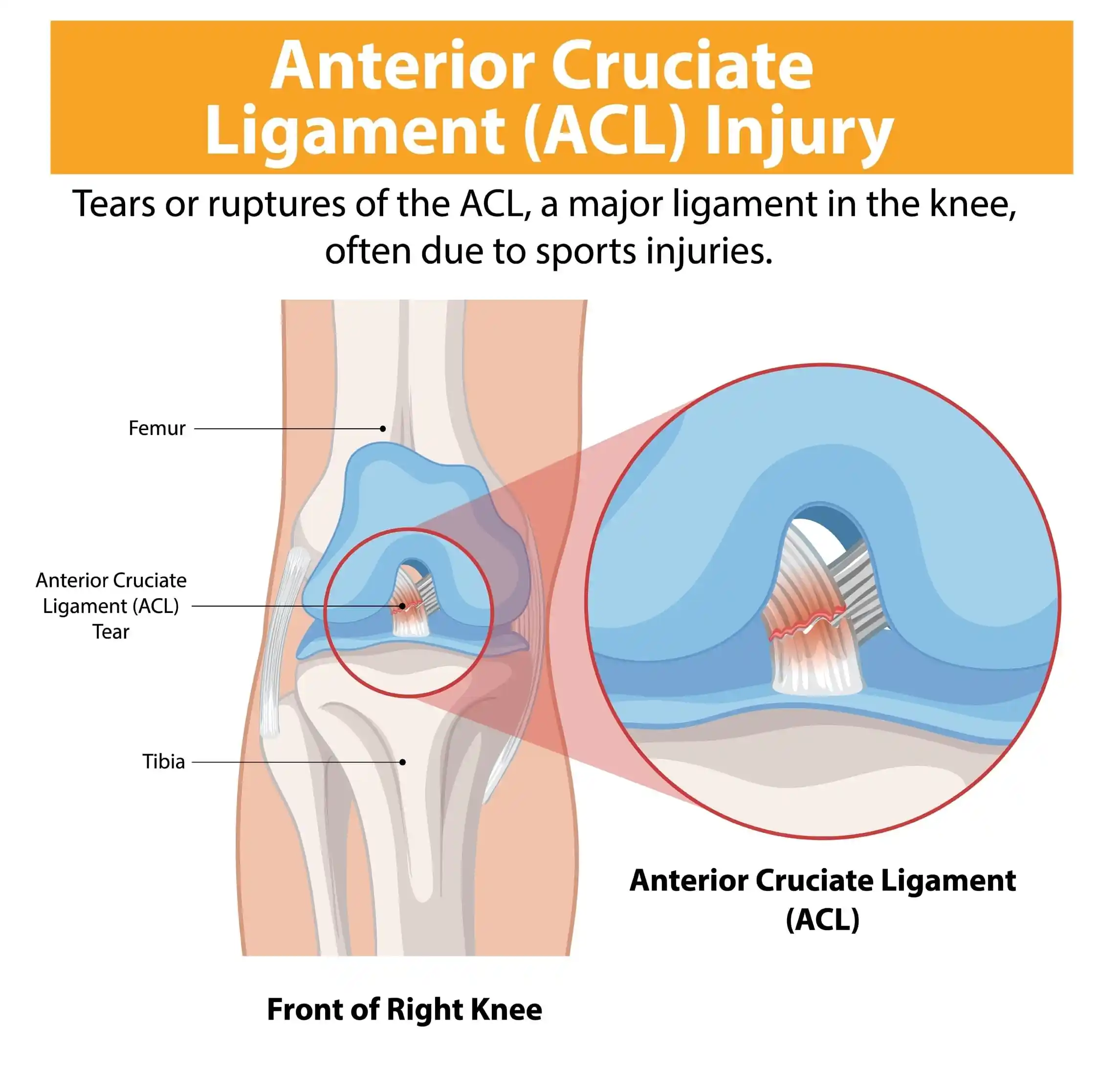
The anterior cruciate ligament (ACL) is one of the four major ligaments that stabilize the knee. It connects the femur (thigh bone) to the tibia (shin bone) and prevents excessive forward movement and abnormal rotation of the knee.
The ACL plays an essential role during activities such as:
When the ACL tears, the knee loses stability. Even routine activities may become painful, while sports become almost impossible without treatment.
Arthroscopic ACL reconstruction is the most commonly performed ACL surgery today.
Instead of making one large incision, surgeons perform the procedure using an arthroscope, a thin camera inserted through small incisions around the knee.
The arthroscope displays magnified images of the knee on a monitor, allowing the surgeon to reconstruct the ligament with exceptional precision.
Advantages of Arthroscopic ACL Reconstruction
Compared to traditional surgery, arthroscopic ACL reconstruction offers several benefits:
Because of these advantages, arthroscopic ACL reconstruction is considered the gold standard for treating complete ACL tears.
The type of ACL reconstruction depends primarily on the graft used to replace the torn ligament.
ACL Reconstruction with Hamstring Graft
Hamstring graft reconstruction is among the most commonly performed ACL surgeries.
During the procedure, the surgeon removes a portion of the hamstring tendon from the patient’s own leg and uses it to reconstruct the ACL.
Benefits of Hamstring Graft
This graft is commonly recommended for young adults and recreational athletes.
ACL Reconstruction with Patellar Tendon Graft
A patellar tendon graft uses the middle portion of the tendon connecting the kneecap to the shin bone.
Because the graft closely resembles the natural ACL, it provides excellent strength and stability.
Benefits of Patellar Tendon Graft
Some patients may experience temporary pain while kneeling after surgery.
ACL Reconstruction with Quadriceps Tendon Graft
Quadriceps tendon grafts are becoming increasingly popular, especially in revision surgeries or patients with larger body frames.
The graft is harvested from the tendon above the kneecap.
Advantages include:
ACL Reconstruction with Allograft
An allograft uses tendon tissue donated by a tissue bank rather than the patient’s own body.
This option eliminates the need to harvest a tendon from the patient’s leg.
Advantages of Allograft Surgery
Allografts are often recommended for older patients or revision ACL surgeries rather than young competitive athletes.

Diet & Lifestyle Consultation

Post-Surgery Recovery Follow up

Free Cab Facility

24*7 Patient Support
Not every ACL injury requires surgery.
Your orthopedic surgeon may recommend ACL reconstruction if conservative treatment is unlikely to restore knee stability or if you wish to return to physically demanding activities.
Surgery is generally advised when:
Early reconstruction can also help prevent long-term complications such as meniscus tears and early knee arthritis.
ACL reconstruction is most commonly recommended for:
Athletes
Football players, basketball players, badminton players, tennis players, skiers, runners, and other athletes often require ACL reconstruction to safely return to sports.
Active Adults
People whose jobs or lifestyles involve frequent walking, climbing, lifting, or physical activity may benefit from surgery.
Young Patients
Young individuals with complete ACL tears generally achieve better long-term outcomes with surgical reconstruction.
Patients with Knee Instability
If your knee frequently buckles or feels unstable, surgery can restore confidence and improve mobility.
Combined Knee Injuries
Patients with ACL tears accompanied by meniscus, cartilage, or collateral ligament injuries usually require surgical treatment.
ACL injuries most commonly occur during sports but can also result from accidents or falls.
Common causes include:
Sports such as football, cricket, basketball, volleyball, kabaddi, skiing, and badminton have a higher risk of ACL injuries.
A torn ACL often causes immediate symptoms that should not be ignored.
Common symptoms include:
If these symptoms occur after a knee injury, prompt evaluation by an orthopedic specialist is recommended to prevent further damage.
An accurate diagnosis is essential to determine the severity of the injury and whether ACL reconstruction surgery is the right treatment. An orthopedic surgeon evaluates your symptoms, medical history, activity level, and performs a detailed physical examination before recommending surgery.
Medical History
Your doctor will ask questions about:
Physical Examination
The orthopedic specialist examines your knee for:
Special clinical tests used to diagnose an ACL tear include:
These tests help assess the extent of ligament damage and knee instability.
Imaging Tests
Your doctor may recommend one or more imaging investigations to confirm the diagnosis and identify associated injuries.
X-rays:
Although X-rays cannot directly show an ACL tear, they help identify fractures or bone injuries that may accompany the ligament injury.
MRI Scan:
MRI is considered the gold standard for diagnosing ACL injuries. It provides detailed images of the ligament and helps detect:
CT Scan:
A CT scan may be recommended in complex knee injuries involving fractures or previous surgeries.
ACL reconstruction is usually performed using minimally invasive arthroscopic techniques. Most procedures take 60 to 120 minutes, depending on the complexity of the injury and whether additional repairs are required.
Step 1: Administration of Anesthesia
The procedure is performed under:
The choice depends on the patient’s medical condition and the anesthetist’s recommendation.
Step 2: Arthroscopic Examination
The surgeon makes two or three small incisions around the knee and inserts an arthroscope equipped with a high-definition camera.
The arthroscope allows the surgeon to examine:
If additional injuries are found, they may be treated during the same surgery.
Step 3: Removal of the Torn ACL
The damaged ACL is carefully removed using specialized arthroscopic instruments to create space for the new ligament graft.
Step 4: Graft Preparation
The selected graft—hamstring tendon, patellar tendon, quadriceps tendon, or allograft—is prepared and shaped to match the size of the original ACL.
Step 5: Creating Bone Tunnels
Small tunnels are created in the femur (thigh bone) and tibia (shin bone). These tunnels guide the new graft into the correct anatomical position.
Proper tunnel placement is critical for restoring normal knee movement and long-term stability.
Step 6: Graft Placement
The prepared graft is carefully passed through the bone tunnels and positioned exactly where the natural ACL was located.
Step 7: Graft Fixation
The graft is secured using medical-grade fixation devices such as:
These implants hold the graft firmly while it heals and integrates with the bone.
Step 8: Final Assessment
Before completing the surgery, the surgeon checks:
The arthroscope is then removed, and the small incisions are closed with sutures.
Step 9: Recovery Room
After surgery, the patient is monitored in the recovery area until the effects of anesthesia wear off.
Many patients are discharged on the same day, while some may stay overnight depending on their overall condition and associated injuries.
ACL reconstruction offers excellent long-term outcomes for patients with complete ACL tears and chronic knee instability.
Restores Knee Stability
The reconstructed ligament stabilizes the knee, reducing episodes of giving way during walking, running, or sports.
Reduces Pain
By correcting knee instability and associated injuries, the surgery helps relieve persistent pain and discomfort.
Improves Knee Function
Most patients regain better knee movement, flexibility, and strength after proper rehabilitation.
Helps Return to Sports
Athletes can gradually return to activities such as football, basketball, badminton, cricket, tennis, and running after completing rehabilitation.
Prevents Further Knee Damage
Persistent knee instability increases the risk of meniscus tears and cartilage damage. Early ACL reconstruction helps protect these structures.
Improves Quality of Life
Patients often regain confidence in their knee, allowing them to participate in work, exercise, and recreational activities without fear of instability.
Long-Term Results
When combined with appropriate rehabilitation, ACL reconstruction provides durable knee stability and excellent functional outcomes for many years.
Although ACL reconstruction is considered a safe and successful orthopedic procedure, like any surgery, it carries some potential risks.
Possible complications include:
Most complications are uncommon and can be minimized by choosing an experienced orthopedic surgeon, following rehabilitation protocols, and attending regular follow-up appointments.
Proper preparation helps improve surgical outcomes and supports a smoother recovery.
Attend a Preoperative Consultation
Discuss your medical history, current medications, allergies, and previous surgeries with your orthopedic surgeon.
Complete Recommended Investigations
Your doctor may advise:
Review Your Medications
Certain medications, including blood thinners and some supplements, may need to be stopped before surgery. Always follow your doctor’s instructions and never discontinue medications on your own.
Stop Smoking and Limit Alcohol
Smoking can delay wound healing and increase the risk of complications. Avoid smoking and excessive alcohol consumption before surgery to promote better recovery.
Prepare Your Home for Recovery
Before surgery, arrange a comfortable recovery space and keep essential items within easy reach. You may also need crutches, a walker, or a knee brace as advised by your surgeon.
Plan for Assistance
Arrange for a family member or friend to drive you home after surgery and help with daily activities during the first few days of recovery.
Follow Fasting Instructions
If general anesthesia is planned, avoid eating or drinking for the duration recommended by your healthcare team before the procedure.
Recovery after ACL reconstruction surgery is a gradual process that involves healing of the graft, restoration of knee movement, strengthening of muscles, and structured rehabilitation. While every patient’s recovery timeline is different, most people can resume normal daily activities within a few weeks, whereas returning to sports usually takes 6 to 12 months.
Your recovery depends on several factors, including:
Following your surgeon’s rehabilitation plan is essential for achieving the best long-term results.
First Week After Surgery
During the first few days, your primary focus will be reducing pain and swelling while protecting the reconstructed ligament.
You can expect:
Most patients are discharged on the same day or within 24 hours after surgery.
Weeks 2 to 6
During this phase:
The rehabilitation program focuses on improving flexibility, restoring knee extension, and rebuilding muscle strength.
Weeks 6 to 12
By this stage, patients usually experience:
Strengthening exercises for the quadriceps, hamstrings, hips, and core muscles become an important part of recovery.
Three to Six Months
Most patients gradually resume:
High-impact activities are introduced only after adequate strength and stability have returned.
Six to Twelve Months
Most athletes are cleared for competitive sports after meeting rehabilitation goals, including:
Returning to sports too early increases the risk of graft failure, making it important to follow your surgeon’s advice.
Rehabilitation is one of the most important aspects of successful ACL reconstruction. Surgery restores the ligament, but physiotherapy helps restore knee function.
A structured rehabilitation program typically includes:
Phase 1: Pain and Swelling Control
Goals include:
Phase 2: Restoring Mobility
Exercises focus on:
Phase 3: Muscle Strengthening
Strength training targets:
Phase 4: Functional Training
Patients begin:
Phase 5: Return to Sports
Advanced rehabilitation includes:
Completing every rehabilitation phase significantly improves surgical outcomes and reduces the likelihood of re-injury.
Following your surgeon’s instructions can help promote faster healing and reduce complications.
Important recovery tips include:
ACL reconstruction is one of the most successful orthopedic procedures performed today.
The surgery has a success rate of approximately 85% to 95%, depending on:
Many patients regain excellent knee stability and successfully return to recreational or competitive sports after completing rehabilitation.
The cost of ACL reconstruction surgery in India varies depending on several medical and hospital-related factors.
These include:
Patients should request a detailed cost estimate that includes surgery, implants, anesthesia, hospitalization, physiotherapy, and follow-up care before undergoing treatment.
Yes. Most health insurance policies in India cover ACL reconstruction surgery when it is performed for a medically diagnosed ligament injury.
Insurance may cover:
Coverage depends on the insurer, policy conditions, waiting periods, exclusions, and network hospital availability. Patients should verify these details with their insurance provider before surgery.
ACL reconstruction surgery is a procedure that replaces a torn anterior cruciate ligament with a tendon graft to restore knee stability and function.
Surgery is usually recommended for complete ACL tears, persistent knee instability, sports related injuries, combined ligament injuries, or when conservative treatment does not restore normal knee function.
A hamstring graft generally causes less pain at the donor site, while a patellar tendon graft provides excellent stability and is often preferred for high performance athletes. Your orthopedic surgeon will recommend the most suitable graft based on your individual needs.
Recovery varies between individuals. Most patients return to routine daily activities within a few weeks, while returning to sports usually requires 6 to 12 months of rehabilitation.
ACL reconstruction has an overall success rate of 85% to 95%, with most patients regaining knee stability and returning to their desired level of activity after rehabilitation.
A complete ACL tear does not typically heal on its own. While some patients may manage symptoms with physiotherapy and bracing, active individuals and those with persistent instability often benefit from ACL reconstruction surgery.
The surgery itself is performed under anesthesia, so you do not feel pain during the procedure. Mild to moderate pain and swelling are common after surgery but can usually be managed with medications and rehabilitation.
Yes. Most health insurance plans cover medically necessary ACL reconstruction surgery, including hospitalization and surgical expenses, subject to policy terms and conditions.
Most patients begin walking with crutches shortly after surgery. Weight-bearing is gradually increased based on the surgeon’s recommendations and individual healing progress.
Look for an orthopedic surgeon experienced in arthroscopic ACL reconstruction, sports injury management, and knee ligament reconstruction, with access to advanced surgical techniques and comprehensive rehabilitation services.
Anil Patel

 Recommends
Went for ACL reconstruction. Dr. Bhupin Singh Bakshi is expert! Recovery has begun early. Physio team excellent. Only thing: parking was tight.









.svg)