Select City

Anal fistulas can be quite uncomfortable, but there's a way to treat them effectively. It's called the ligation of the intersphincteric fistula tract (LIFT) surgery. This procedure is specially designed to treat anal fistulas, particularly those classified as transsphincteric, which are more complex. It's a minimally invasive fistula surgery that aims to preserve sphincter muscles, reducing the chances of complications like anal incontinence. The LIFT surgery for fistula is known for quicker healing and fewer recurrences compared to other methods like VAAFT (video-assisted anal fistula treatment). If you're dealing with an anal fistula, consult a doctor at Pristyn Care to discuss your treatment options.
Anal fistulas can be quite uncomfortable, but there's a way to treat them ... Read More




Free Cab Facility

No-Cost EMI

Support in Insurance Claim

1-day Hospitalization

USFDA-Approved Procedure
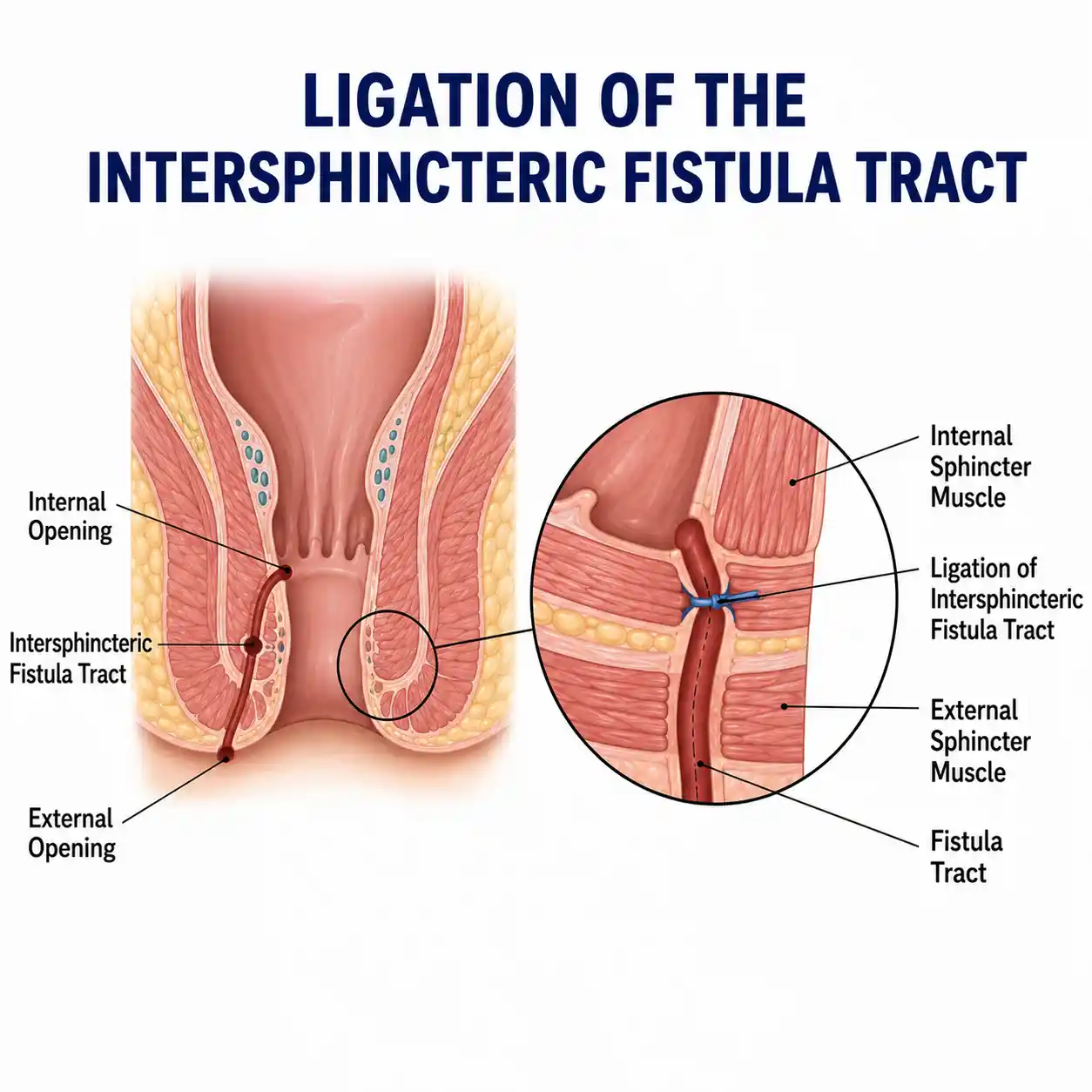
Ligation of the intersphincteric fistula tract (LIFT) is a surgical procedure for treating anal fistulas. Anal fistulas are small tunnels that can form between the end of the bowel and the skin near the anus. They commonly occur after an abscess in the area has drained but not healed completely. LIFT is particularly useful for those fistulas that cross multiple layers of muscle called sphincters.
This technique is preferred because it focuses on keeping these sphincter muscles intact, which means there’s less risk of complications like anal incontinence, where one has trouble controlling bowel movements after surgery. During the procedure, surgeons make a small cut along the side of your anus to reach the infected area and tie off the fistula tract between two points—near both internal and external sphincters. The main aim here is to close up that troublesome opening securely while causing minimal harm to nearby structures. Patients often experience faster recovery and lower chances of having the problem come back as compared to more invasive options.
Free Fistula Surgery Cost Calculator
Fill details to get actual cost
There are different types of LIFT techniques aimed at improving healing and reducing recurrence:
LIFT-Plus: Combines standard LIFT with additional techniques such as flap advancement or other reconstructive methods to further aid healing and lessen recurrence chances.
Before you head into surgery for anal fistulas, your doctor will need to figure out exactly what’s going on. Here is how doctors might diagnose:
LIFT surgery for fistulas is a modern method used to treat intersphincteric fistulas. Here’s a step-by-step look at what happens during this minimally invasive surgery:

Diet & Lifestyle Consultation

Post-Surgery Follow-Up

Free Cab Facility

24*7 Patient Support
Not everyone needs surgery for an anal fistula. Here’s how doctors decide if this is the right treatment for you:
Choosing between LIFT vs. VAAFT (video-assisted anal fistula treatment) often depends on specific medical advice and personal health goals. Your doctor will guide you on the best surgical method for your condition.
Ligation of the intersphincteric fistula tract, or LIFT surgery, is a modern and effective method to treat anal fistulas. This procedure focuses on addressing these troublesome conditions with as little discomfort as possible. Here are some of the benefits of this treatment:
Effective for Complex Fistulas: LIFT shines when it comes to dealing with high transsphincteric or complex anal fistulas that are tough to treat using other methods.
Getting ready for the LIFT surgery is important for a smooth experience and recovery. Here are some steps to follow:
Arrange for Transportation: Plan ahead by arranging for someone to drive you home post-surgery and help out as you recover.
Recovering from this minimally invasive fistula surgery can be pretty straightforward if you know what to expect and how to care for yourself. Here are some points to consider:
Dietary Considerations: Drink plenty of water and eat foods rich in fibre. This helps prevent constipation, which could strain your surgical site.
While LIFT is considered among the best surgical methods for fistula treatment, it’s good to be aware of potential complications:
LIFT (Ligation of the Intersphincteric Fistula Tract) is a minimally invasive surgical procedure used to treat anal fistulas. During the procedure, the surgeon closes and removes the infected fistula tract while preserving the anal sphincter muscles. This approach helps reduce the risk of incontinence and promotes faster healing compared to some traditional surgical techniques.
LIFT surgery is generally recommended for patients with transsphincteric or complex anal fistulas where preserving the anal sphincter is important. Your surgeon will evaluate the type, location, and complexity of the fistula through a physical examination and imaging tests before determining whether LIFT is the most suitable treatment.
Both LIFT surgery and laser fistula treatment are effective options for selected patients. LIFT is often preferred for certain complex fistulas because it preserves the sphincter muscles while addressing the fistula tract. The most appropriate treatment depends on the type of fistula, its location, previous treatments, and your surgeon’s clinical assessment.
LIFT surgery has shown favorable success rates in appropriately selected patients. The outcome depends on several factors, including the complexity of the fistula, the presence of infection, previous surgeries, and adherence to post operative care. Your surgeon can discuss the expected outcomes based on your individual condition.
Most patients can return to light daily activities within a few days after LIFT surgery, while complete healing may take several weeks. Recovery varies depending on the severity of the fistula and your overall health. Following your doctor’s instructions regarding wound care, diet, and follow up visits can help support a smooth recovery.
LIFT surgery is performed under anesthesia, so you will not feel pain during the procedure. Mild to moderate discomfort after surgery is common and can usually be managed with prescribed pain medications. Most patients notice that the discomfort gradually improves during the recovery period.
Although LIFT surgery is designed to reduce the risk of recurrence, no treatment can completely eliminate the possibility of an anal fistula returning. Regular follow up appointments, proper wound care, and early treatment of any new symptoms can help reduce the risk of recurrence.
The cost of LIFT surgery in India depends on several factors, including the hospital, city, surgeon’s experience, diagnostic tests, hospitalization, and insurance coverage. A consultation with a specialist can provide a personalized treatment plan and an accurate estimate of the overall cost.
After LIFT surgery, keep the surgical area clean, take all prescribed medications as directed, stay well hydrated, and eat a high-fiber diet to avoid constipation. Avoid heavy lifting and strenuous activities until your doctor advises otherwise. Contact your surgeon if you experience excessive pain, heavy bleeding, fever, or persistent discharge from the surgical site.
Choose a qualified colorectal or general surgeon with experience in treating anal fistulas using sphincter preserving techniques such as LIFT. Consider the surgeon’s qualifications, experience with complex fistulas, patient reviews, hospital facilities, and the availability of comprehensive pre operative and post operative care before making your decision.