

Select City


Call Us
Book Appointment
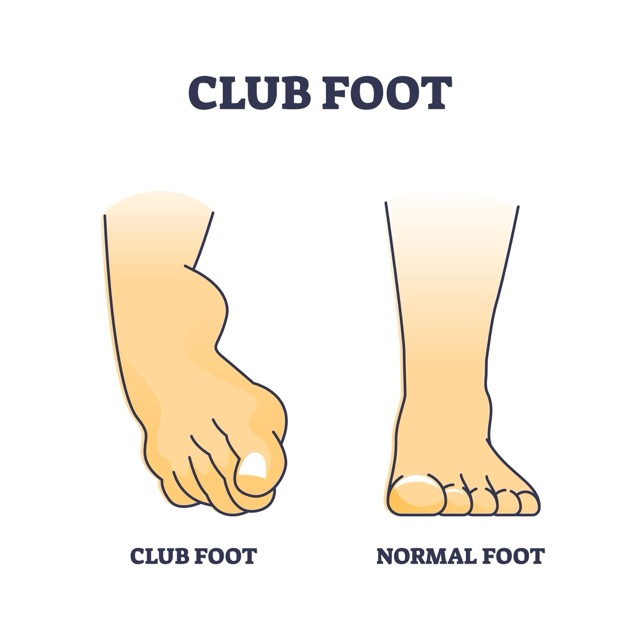
Clubfoot is a congenital condition commonly observed in newborns where the foot is twisted inward, making normal movement difficult. Not all cases of clubfoot require surgery; many can be treated by methods such as the Ponseti method, which involves bracing and casting. However, in instances where these non-surgical methods do not provide sufficient results, clubfoot surgery becomes necessary. If you suspect your child might be showing clubfoot symptoms or if your child needs bilateral clubfoot treatment, consult with the seasoned orthopedic surgeons at Pristyn Care.
Clubfoot is a congenital condition commonly observed in newborns where the foot is ...twisted inward, making normal movement difficult. Not all cases of clubfoot require surgery; many can be treated by methods such as the Ponseti method, which involves bracing and casting. However, in instances where these non-surgical methods do not provide sufficient results, clubfoot surgery becomes necessary. If you suspect your child might be showing clubfoot symptoms or if your child needs bilateral clubfoot treatment, consult with the seasoned orthopedic surgeons at Pristyn Care.Read More



3M+
Happy Patients
50+
Disease
200+
Hospitals
30+
Cities

Free Cab Facility

No-Cost EMI

Support in Insurance Claim

1-day Hospitalization

USFDA-Approved Procedure
Clubfoot surgery, medically known as talipes equinovarus surgery, is a procedure conducted to correct the inward twisting of an infant’s foot—a condition commonly referred to as clubfoot. This congenital deformity can impair your child’s ability to walk normally, hence demanding immediate attention.
The surgical process typically takes around two to three hours and is performed under general anaesthesia. The surgeon usually makes one or two incisions on the back and inside of the foot to release tight tendons and ligaments or to remove a portion of bone, thus correcting the alignment. Following surgery, a cast is applied to keep the foot in its corrected position during healing, which may take several weeks.
While mild clubfoot conditions can often be managed with non-surgical methods like casting and bracing, for more severe cases, surgery remains a critical option.
Free Knee Replacement Surgery Cost Calculator
Fill details to get actual cost
Clubfoot surgery can be categorised into two main types depending on the severity of the condition:
Identifying clubfoot early is crucial for successful treatment. It is typically diagnosed shortly after birth through the following key indicators:
In some cases, X-rays may be used to assess bone structure and confirm the diagnosis. However, this is not always necessary.
Clubfoot surgery becomes a consideration when non-surgical methods like the Ponseti method do not yield satisfactory results. The procedure involves the following steps:

Diet & Lifestyle Consultation

Post-Surgery Follow-Up

Free Cab Facility

24*7 Patient Support
The decision to proceed with clubfoot surgery is typically made after considering various factors. Not all cases of clubfoot require surgery. It is usually recommended in the following situations:
Remember, every child’s case is unique. Hence, treatment strategies including the choice between non-surgical methods and surgery should be individualised for best results.
Clubfoot surgery is often recommended for cases where non-invasive treatments like the Ponseti method are insufficient. This surgical intervention can offer numerous benefits, including:
Preparation for clubfoot surgery is crucial for obtaining optimal results. Here’s how you can prepare:
Recovering from clubfoot surgery needs special care. Here are some recovery tips:
Like any surgical procedure, clubfoot surgery also has potential risks. Here are some complications that may arise:
By understanding these aspects of clubfoot surgery, families can better navigate the treatment process and effectively support their child’s recovery.
Clubfoot, a congenital condition where a newborn’s foot is twisted out of shape or position, is quite common in India. Fortunately, numerous treatment options are available, from non-invasive methods to surgery in severe cases. One of these treatments is clubfoot surgery, which can be a crucial step in managing the condition.
In India, the cost of clubfoot surgery can significantly differ based on several factors. Here are a few key considerations:
When it comes to insurance coverage for clubfoot surgery in India, it largely depends on the specific terms and conditions of your individual policy. Most insurance plans cover surgical procedures for congenital conditions like clubfoot but this can vary from policy to policy.
Here are some general aspects which may be covered under insurance:
However, there could be exclusions to these inclusions. For instance, experimental procedures, cosmetic surgeries, or treatments from out-of-network providers may not be covered.
It’s important to have a clear understanding of your insurance coverage. Always consult with your insurance provider to understand what exactly is covered and the potential out-of-pocket costs you might incur in the treatment of clubfoot.
Clubfoot symptoms are usually noticeable at birth. The foot may be turned inward and downward, the calf muscles might appear smaller in size, and the affected foot or feet may be slightly shorter than normal.
Yes, bilateral clubfoot, where both feet are affected, is quite common. Almost half of the children with clubfoot have it in both feet.
The exact causes of clubfoot are still unknown. However, it is believed that genetic factors, environmental conditions during pregnancy, or a combination of both might play a role.
The ideal age for clubfoot surgery can vary depending on the severity of the condition and how well it responds to non-surgical treatments. Generally, doctors prefer to conduct the surgery between nine months and one year of age.
Absolutely! Early detection and treatment can significantly improve the outcome for children born with clubfoot and help them lead a normal life.
Avail FREE Doctor Consultation

Consult with our expert surgeon for more than 50+ diseases

Once you share your details, our care coordinator will get in touch with you.

The coordinator will understand your symptoms and health condition in detail.

Your consultation will be scheduled at the earliest.
3M +
Happy Patients
150 +
Clinics
30 +
Cities

120Cr—Patient Savings Delivered
so patients focus on recovery, not bills.

Complete Transparency
No hidden charges or surprise bills

End-to-End Insurance Handling
Complete insurance processing support

Up to 20% Savings on Every Surgery
powered by smarter insurance handling

Easy EMI Options
Flexible payment plans available
120Cr—Patient Savings Delivered
so patients focus on recovery, not bills.
Complete Transparency
No hidden charges or surprise bills
Your Form Has Been Submitted Successfully.
Our care coordinator will call you shortly.

Book Your FREE Consultation
Consult with our expert surgeon for more than 50+ diseases
Once you share your details, our care coordinator will get in touch with you.
The coordinator will understand your symptoms and health condition in detail.
Your consultation will be scheduled at the earliest.
3M +
Happy Patients
150 +
Clinics
30 +
Cities
)