

Select City


Call Us
Book FREE Appointment
Stroke treatment focuses on restoring blood flow, minimizing brain damage, and improving recovery. Explore emergency care, advanced procedures, rehabilitation, and long-term management to regain function and reduce future stroke risk.
Stroke treatment focuses on restoring blood flow, minimizing brain damage, and improving recovery. ... Explore emergency care, advanced procedures, rehabilitation, and long-term management to regain function and reduce future stroke risk. Read More



3M+
Happy Patients
50+
Disease
200+
Hospitals
30+
Cities

Free Cab Facility

No-Cost EMI

Support in Insurance Claim

1-day Hospitalization

USFDA-Approved Procedure
A stroke occurs when the brain is deprived of oxygen and nutrients due to interrupted blood circulation or bleeding. Since brain cells are highly sensitive to oxygen deprivation, permanent damage can occur if blood flow is not restored quickly.
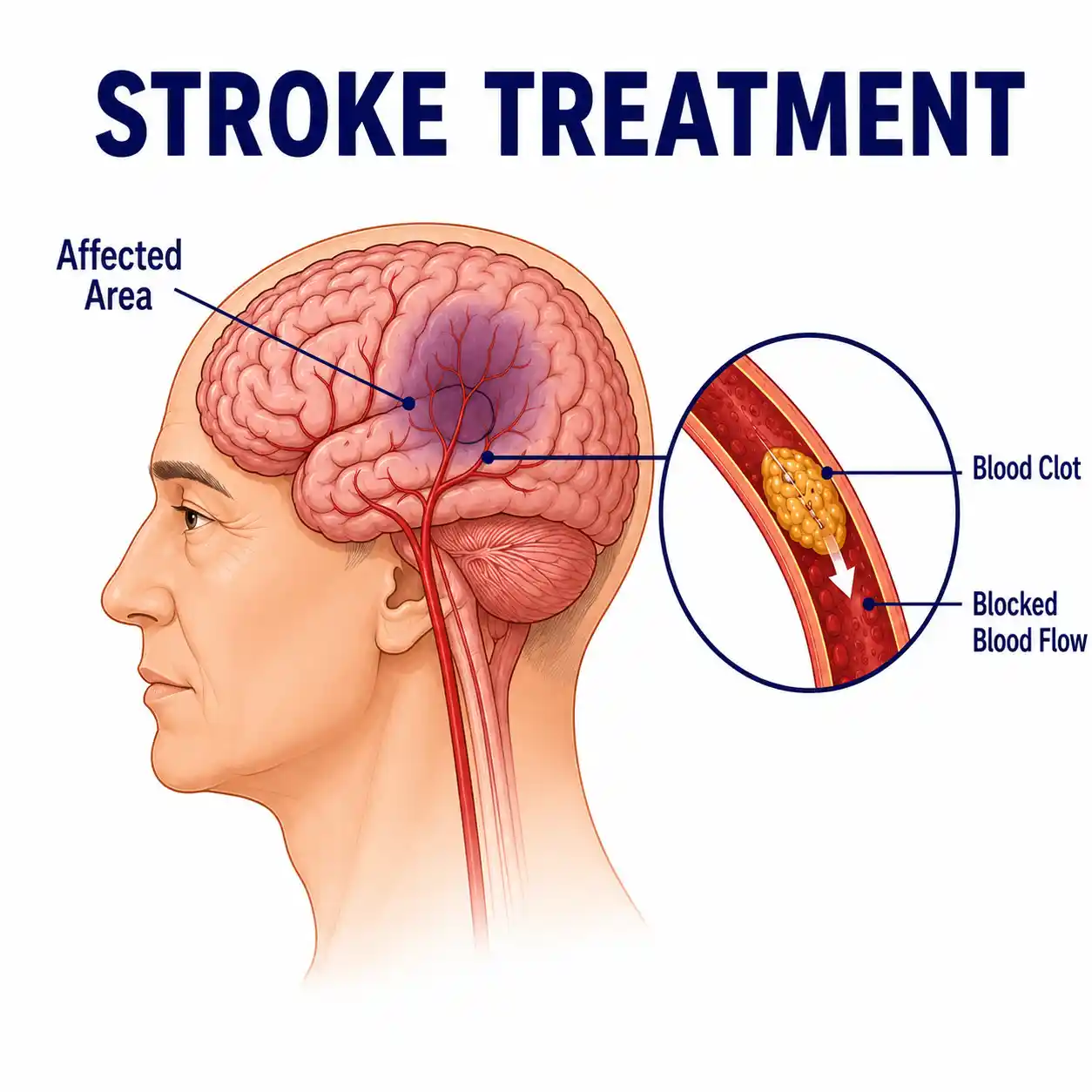
There are three main types of stroke:
This is the most common type of stroke and occurs when a blood clot blocks an artery supplying blood to the brain.
A hemorrhagic stroke occurs when a weakened blood vessel ruptures, causing bleeding within or around the brain.
Often called a “mini-stroke”, a TIA causes temporary blockage of blood flow. Although symptoms resolve quickly, a TIA is an important warning sign of a future stroke and requires immediate medical evaluation.
Free Neurology Others Surgery Cost Calculator
Fill details to get actual cost
Stroke symptoms usually appear suddenly and may include:
The FAST warning signs help recognize a stroke quickly:
The causes vary depending on the type of stroke.
Common causes include:
Several factors increase the risk of stroke.
These include:

Diet & Lifestyle Consultation

Post-Surgery Follow-Up

Free Cab Facility

24*7 Patient Support
Call emergency medical services immediately if you notice:
Every minute counts during a stroke. Delayed treatment increases the risk of permanent brain injury.
Rapid diagnosis helps determine the type of stroke and the most appropriate treatment.
Your healthcare team may perform:
Assessment includes:
Imaging helps identify whether the stroke is caused by a blockage or bleeding.
Common investigations include:
These imaging studies evaluate blood vessels supplying the brain.
Used to assess narrowing of the carotid arteries.
Performed to detect heart rhythm abnormalities such as atrial fibrillation.
Evaluates heart function and identifies potential sources of blood clots.
Blood investigations assess:
Treatment varies according to the type of stroke and how soon medical care is received.
If the patient reaches the hospital within the recommended treatment window, clot-dissolving medication may be administered to restore blood flow to the brain.
This treatment is most effective when given as early as possible after symptom onset.
Mechanical thrombectomy is a minimally invasive procedure used to remove large blood clots from blocked brain arteries.
A catheter is inserted through a blood vessel and guided to the blocked artery, where specialized devices remove the clot and restore circulation.
Selected patients may benefit from thrombectomy even several hours after symptom onset, depending on imaging findings.
Treatment aims to control bleeding and reduce pressure inside the brain.
Management may include:
Surgery may be necessary for selected patients with severe bleeding, brain swelling, aneurysms, or blocked carotid arteries.
Common procedures include:
The choice of surgery depends on the underlying condition and overall clinical status.
Following emergency treatment, medications help prevent recurrent strokes.
These may include:
Rehabilitation is an essential part of stroke recovery.
A multidisciplinary rehabilitation program may include:
Helps improve:
Focuses on restoring independence in daily activities such as dressing, bathing, and eating.
Helps patients recover:
Supports improvement in:
Counseling helps patients and caregivers cope with emotional challenges following a stroke.
Healthy lifestyle habits reduce the risk of recurrent strokes.
These include:
Recovery varies depending on the severity of the stroke, the affected area of the brain, and how quickly treatment was received.
Some individuals recover almost completely, while others require ongoing rehabilitation and long-term support.
Regular follow-up helps:
Stroke may lead to:
Early rehabilitation helps reduce disability and improve functional outcomes.
A stroke is a medical emergency that occurs when blood flow to the brain is interrupted by a blockage or bleeding, resulting in damage to brain tissue.
Stroke cannot be reversed once brain cells are permanently damaged, but prompt treatment can minimize injury and significantly improve recovery. Rehabilitation helps many individuals regain lost functions.
Treatment depends on the type of stroke. Ischemic stroke may require clot-dissolving medications or mechanical thrombectomy, while hemorrhagic stroke may require blood pressure control, surgery, or procedures to stop bleeding.
Stroke treatment should begin as soon as possible. Immediate medical attention offers the greatest chance of reducing brain damage and improving recovery.
Many people experience significant recovery with timely treatment and rehabilitation. Recovery depends on the severity of the stroke, the affected brain region, and the individual’s overall health.
Stroke is primarily managed by neurologists, emergency medicine specialists, neurosurgeons (when surgery is required), and rehabilitation specialists.
Many strokes can be prevented by controlling blood pressure, managing diabetes and cholesterol, avoiding smoking, maintaining a healthy weight, exercising regularly, and treating heart conditions such as atrial fibrillation.
A transient ischemic attack (TIA) causes temporary stroke-like symptoms that resolve without permanent brain damage. However, it is a serious warning sign of an increased risk of a future stroke and requires immediate medical evaluation.

Avail FREE Doctor Consultation

Consult with our expert surgeon for more than 50+ diseases

Once you share your details, our care coordinator will get in touch with you.

The coordinator will understand your symptoms and health condition in detail.

Your consultation will be scheduled at the earliest.
3M +
Happy Patients
150 +
Clinics
30 +
Cities

120Cr—Patient Savings Delivered
so patients focus on recovery, not bills.

Complete Transparency
No hidden charges or surprise bills

End-to-End Insurance Handling
Complete insurance processing support

Up to 20% Savings on Every Surgery
powered by smarter insurance handling

Easy EMI Options
Flexible payment plans available
120Cr—Patient Savings Delivered
so patients focus on recovery, not bills.
Complete Transparency
No hidden charges or surprise bills
Your Form Has Been Submitted Successfully.
Our care coordinator will call you shortly.
Book Your FREE Consultation
Consult with our expert surgeon for more than 50+ diseases
Once you share your details, our care coordinator will get in touch with you.
The coordinator will understand your symptoms and health condition in detail.
Your consultation will be scheduled at the earliest.
3M +
Happy Patients
150 +
Clinics
30 +
Cities
)