Select City

A cyst is a sac-like lump filled with fluid, pus, or semi-solid material that can develop beneath the skin or inside the body. While many cysts are harmless, some may become painful, infected, increase in size, or interfere with daily activities. In such cases, cyst removal surgery is often the most effective and permanent treatment. At Pristyn Care, our experienced surgeons provide advanced cyst treatment using minimally invasive surgical techniques for sebaceous cysts, epidermoid cysts, dermoid cysts, facial cysts, scalp cysts, vaginal cysts, and other benign skin cysts. We offer accurate diagnosis, personalized treatment plans, and comprehensive post-operative care to ensure faster recovery with minimal scarring.
A cyst is a sac-like lump filled with fluid, pus, or semi-solid material ... Read More




Free Cab Facility

No-Cost EMI

Support in Insurance Claim

1-day Hospitalization

USFDA-Approved Procedure
Choose Your City
It help us to find the best doctors near you.

Ahmedabad
Bangalore
Bhubaneswar
Chandigarh
Chennai
Coimbatore
Delhi
Hyderabad
Indore
Jaipur
Kochi
Kolkata
Kozhikode
Lucknow
Madurai
Mumbai
Patna
Pune
Raipur
Ranchi
Thiruvananthapuram
Vijayawada
Visakhapatnam
Delhi
Hyderabad
Pune
Mumbai
Bangalore
 Pristyn Care Elantis Hospital, Lajpat Nagar, Delhi
Opp.Badwani Plaza, Manorama Ganj, Old Palasia, Indore, Madhya Pradesh 452003
Pristyn Care Eminent Hospital 6/1 Opp. Barwani Plaza, Manorama Ganj, Old Palasia, Indore - 452018
Pristyn Care Sheetla Hospital, Sector 8, Gurgaon
Pristyn Care Elantis Hospital, Lajpat Nagar, Delhi
Opp.Badwani Plaza, Manorama Ganj, Old Palasia, Indore, Madhya Pradesh 452003
Pristyn Care Eminent Hospital 6/1 Opp. Barwani Plaza, Manorama Ganj, Old Palasia, Indore - 452018
Pristyn Care Sheetla Hospital, Sector 8, Gurgaon
Cyst removal surgery is a medical procedure aimed at extracting cysts, which are fluid-filled sacs that can develop on or within the body. These cysts may contain air, fluid, pus, or other materials and, while generally benign, can range in size and cause discomfort or other symptoms.
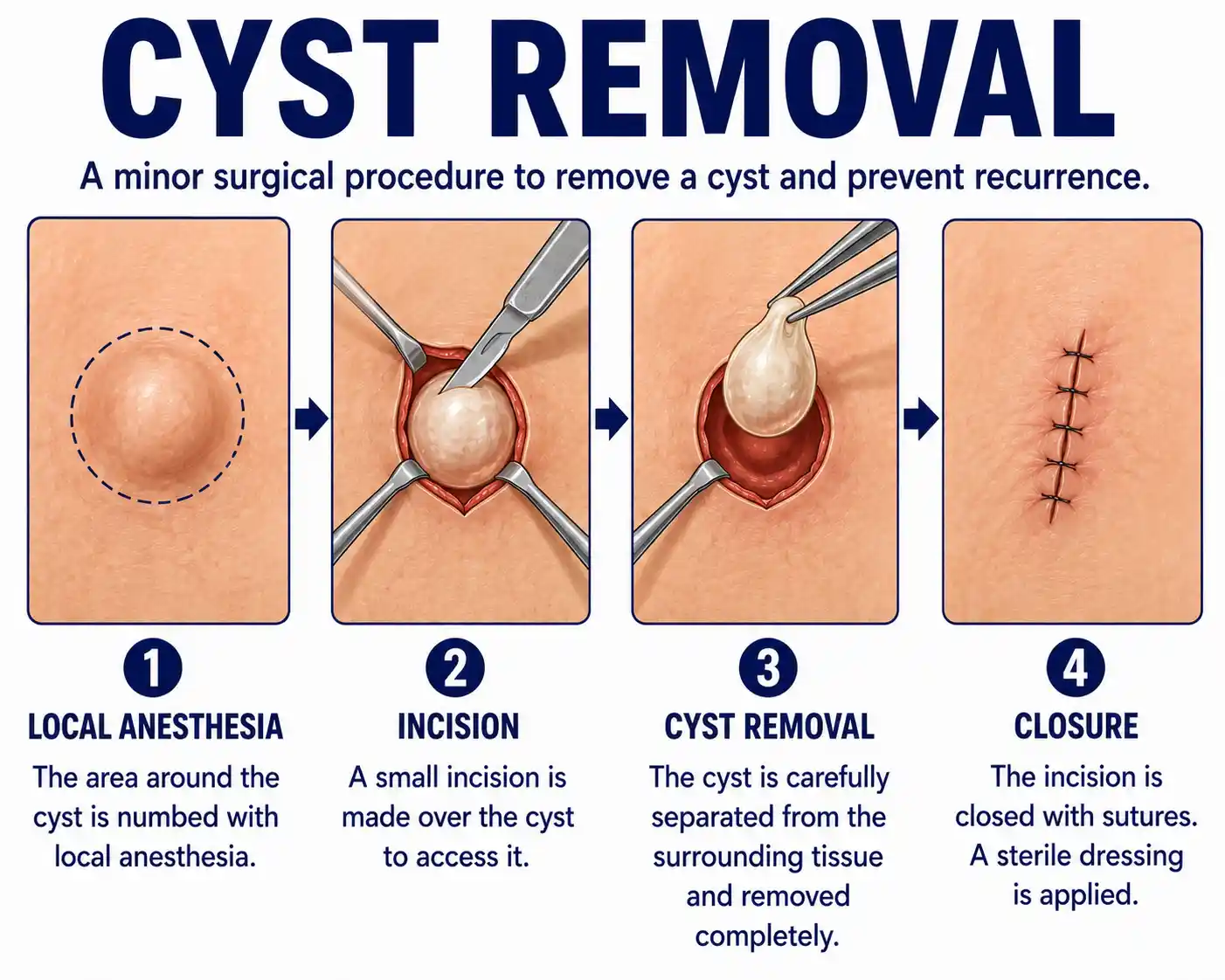
The necessity for cyst removal surgery depends on factors such as the cyst’s location, size, potential for infection, and associated discomfort. Typically performed by specialists such as dermatologists or surgeons with expertise in skin health, the procedure can vary in complexity based on the cyst’s characteristics. The benefits of this surgery include alleviating symptoms, preventing complications from cyst growth or infection, and improving cosmetic appearance.
Free Double Chin Surgery Cost Calculator
Fill details to get actual cost
Cysts can develop in different parts of the body and vary in size, cause, and symptoms. While most cysts are benign (non-cancerous), some may become infected or painful and require medical treatment or surgical removal.
A sebaceous cyst is a slow-growing lump that develops when a sebaceous (oil) gland becomes blocked. It is commonly found on the scalp, face, neck, back, or shoulders and is filled with oily or cheese-like material. If the cyst becomes infected or keeps recurring, sebaceous cyst removal surgery may be recommended.
An epidermoid cyst, also known as an epidermal cyst, forms when skin cells become trapped beneath the surface of the skin. It usually contains keratin and appears as a small, painless lump. Surgical excision is the most effective treatment for recurrent or infected epidermoid cysts.
A dermoid cyst is a congenital cyst that develops before birth and may contain skin, hair follicles, or fatty tissue. These cysts can occur on the face, ovaries, or other parts of the body and are usually removed surgically if they grow or cause symptoms.
Pilar cysts commonly develop on the scalp due to blocked hair follicles. They are firm, smooth, and generally non-cancerous. Large or bothersome scalp cysts can be safely removed through a minor surgical procedure.
A Bartholin cyst develops when one of the Bartholin glands near the vaginal opening becomes blocked. Small cysts may not cause symptoms, but larger or infected cysts can cause pain, swelling, and difficulty walking or sitting. Depending on the severity, treatment may involve drainage or surgical removal.
Kidney cysts are fluid-filled sacs that form inside or on the kidneys. Simple kidney cysts often do not require treatment, but large, painful, or complex cysts may need aspiration or surgical removal to prevent complications.
Ganglion cysts usually develop near joints or tendons, particularly in the wrist, hand, ankle, or foot. They may cause discomfort or restrict movement. Treatment options include observation, aspiration, or surgical excision if symptoms persist.
Scrotal cysts are benign lumps that develop on the skin of the scrotum. Although they are often harmless, surgery may be recommended if the cyst becomes painful, infected, or continues to increase in size.
An ovarian cyst is a fluid-filled sac that develops on or inside an ovary. Many ovarian cysts are harmless and disappear on their own without treatment. However, larger, persistent, or symptomatic cysts can cause pelvic pain, bloating, irregular menstrual cycles, or discomfort during intercourse.
Many cysts remain painless for years. However, symptoms can develop depending on the size, location, or infection.
Common symptoms include:
If a cyst becomes infected, you may notice increasing pain, redness, fever, or a lump filled with pus. Medical attention should be sought promptly in such cases.
Cysts can develop due to several underlying reasons. Common causes include:
While some cysts form without a clear cause, maintaining good skin hygiene and seeking early medical care for unusual lumps may reduce the risk of complications.

Diet & Lifestyle Consultation

Post-Surgery Follow-Up

Free Cab Facility

24*7 Patient Support
Anyone can develop a cyst, but certain factors may increase the likelihood:
Not every cyst requires surgery. Small, painless cysts may simply be monitored.
However, treatment is recommended if the cyst:
Ignoring an infected or enlarging cyst can lead to abscess formation, surrounding tissue infection, or recurrent inflammation.
The first step in treatment is identifying the type of cyst and ruling out other conditions such as lipomas, abscesses, or tumors.
Your doctor may recommend:
Most skin cysts can be diagnosed through a clinical examination, where the doctor assesses the size, location, consistency, and signs of infection.
An ultrasound helps determine whether the lump is fluid-filled or solid and is commonly used for deeper cysts.
Advanced imaging may be advised for larger or deep-seated cysts, particularly those near vital structures or internal organs.
If the cyst is infected or draining pus, a sample may be sent for laboratory analysis to identify the causative bacteria and guide antibiotic treatment.
In rare cases where the diagnosis is uncertain, the removed tissue may be examined under a microscope to confirm that the cyst is benign.
The right treatment for a cyst depends on its type, size, location, symptoms, and whether it is infected or recurring. While some small, painless cysts can be monitored, larger or symptomatic cysts often require medical or surgical treatment to prevent complications and recurrence.
Small, non-painful, and non-infected cysts may not require immediate treatment. Your doctor may recommend regular follow-up visits to monitor the cyst for any changes in size or symptoms.
If a cyst becomes inflamed or infected, medications such as antibiotics or anti-inflammatory drugs may be prescribed to control the infection and relieve pain. However, medications alone cannot permanently remove the cyst.
Some fluid-filled cysts can be drained using a needle or a small incision. Although this procedure provides temporary relief, the cyst lining remains intact, increasing the chances of recurrence. Drainage is usually reserved for selected cases and is not considered a permanent solution.
A cyst operation is the most effective treatment for recurrent, infected, painful, or large cysts. During the procedure, the surgeon removes both the cyst and its wall (capsule), significantly reducing the risk of the cyst returning. Depending on the type and location of the cyst, the surgery may be performed under local or general anesthesia.
Your doctor may recommend cyst surgery if the cyst:
Early surgical treatment can help prevent recurrent infections, abscess formation, and unnecessary discomfort.
The exact procedure varies depending on the type and location of the cyst. However, most skin cyst removal surgeries follow a similar approach.
The surgeon examines the cyst and may recommend imaging tests, such as an ultrasound, if the diagnosis is uncertain or the cyst is located deeper beneath the skin.
Most superficial skin cysts are removed under local anesthesia, while larger or deeper cysts may require regional or general anesthesia.
A small incision is made directly over the cyst to access the affected tissue. The incision is carefully planned to minimize visible scarring.
The surgeon gently separates the cyst from the surrounding tissues and removes it along with its capsule. Removing the entire cyst wall is important to reduce the risk of recurrence.
Once the cyst has been removed, the area is cleaned thoroughly and closed with stitches if necessary. A sterile dressing is then applied to protect the surgical site.
Most cyst operations are completed within 20 to 60 minutes, and patients can usually return home the same day.
Recovery depends on the size, location, and type of cyst that was removed. Most patients can resume their normal daily activities within a few days after surgery.
Typical recovery milestones include:
Following your surgeon’s wound care instructions can help promote faster healing and reduce the risk of infection.
A cyst is a closed sac filled with fluid, pus, or semi-solid material that develops under the skin or inside the body.
Some small cysts may resolve naturally, but many continue growing or recur. Persistent or painful cysts should be evaluated by a doctor.
Complete surgical removal (cyst excision) is considered the most effective treatment for recurrent, infected, or large cysts.
After cyst removal surgery, expect some tenderness and possible bruising at the incision site. These symptoms are generally mild and improve within a few weeks. It’s crucial to follow your doctor’s care instructions to ensure proper healing.
If the entire cyst wall is removed during surgery, recurrence is uncommon. Incomplete removal or drainage alone increases the risk of recurrence.
Recovery time can vary, but most patients start to feel better within a few days. Complete healing, including the disappearance of any scabbing and tenderness, typically occurs within a few weeks, depending on the size and location of the cyst and the type of closure used for the wound.
Signs of infection include increased redness, swelling, warmth around the incision site, pus drainage, or worsening pain. If you experience a fever or any of these symptoms, contact your healthcare provider immediately for assessment and possible treatment.
Cyst removal is typically performed under local anaesthesia, which minimises pain during the procedure. After the anaesthesia wears off, some discomfort or mild pain may be experienced, which usually can be managed with over-the-counter pain relief medications as recommended by your doctor.

.jpg/1752216854459_ban-Icon.png)