

Select City


Call Us
Book FREE Appointment
Dementia treatment focuses on managing symptoms, slowing disease progression where possible, and improving quality of life. Explore personalized treatment options, including medications, cognitive therapy, lifestyle changes, and supportive care.
Dementia treatment focuses on managing symptoms, slowing disease progression where possible, and improving ... quality of life. Explore personalized treatment options, including medications, cognitive therapy, lifestyle changes, and supportive care. Read More




3M+
Happy Patients
50+
Disease
200+
Hospitals
30+
Cities

Free Cab Facility

No-Cost EMI

Support in Insurance Claim

1-day Hospitalization

USFDA-Approved Procedure
Dementia is a syndrome characterized by a gradual decline in cognitive function that interferes with daily life and independent functioning. It commonly affects older adults, although early-onset dementia can occur before the age of 65.
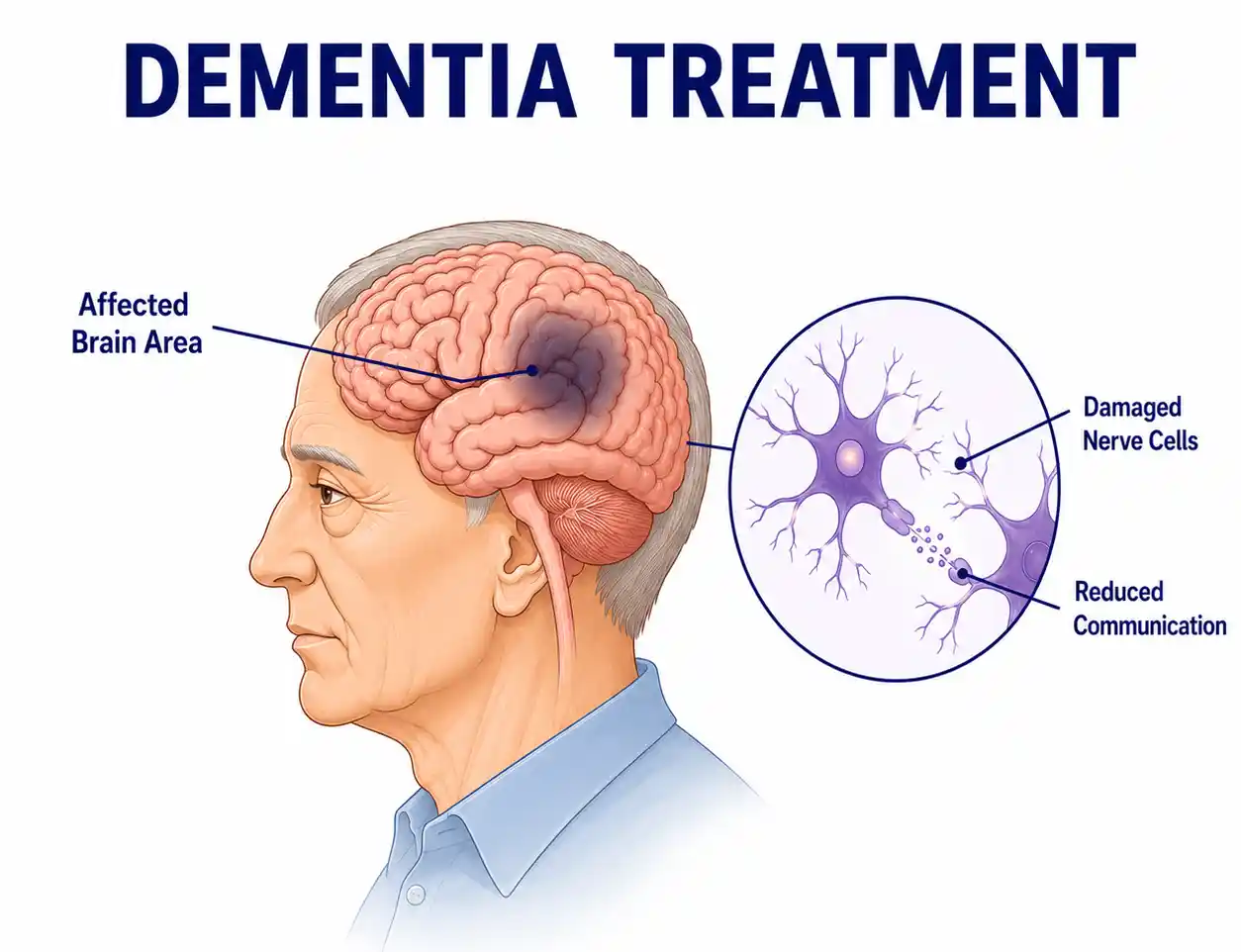
Dementia develops when nerve cells in the brain become damaged, affecting memory, language, decision-making, behavior, and problem-solving abilities. Different types of dementia affect different parts of the brain and may progress at varying rates.
Common types of dementia include:
Free Neurology Others Surgery Cost Calculator
Fill details to get actual cost
Symptoms vary depending on the stage and underlying cause but commonly include:
In advanced stages, individuals may experience:
Dementia occurs due to damage or degeneration of brain cells.
Common causes include:
Some medical conditions causing dementia-like symptoms may be reversible with appropriate treatment.
Several factors increase the risk of dementia.
These include:

Diet & Lifestyle Consultation

Post-Surgery Follow-Up

Free Cab Facility

24*7 Patient Support
Consult a healthcare professional if you or a loved one experiences:
Early evaluation can help identify treatable conditions and improve long-term planning.
Diagnosis involves evaluating cognitive function and identifying the underlying cause.
Healthcare providers may recommend:
Assessment includes:
Evaluation of:
Standardized tests evaluate:
Blood investigations help identify reversible causes such as:
Imaging studies may include:
Detailed cognitive testing helps differentiate between various forms of dementia and determine disease severity.
Treatment depends on the type of dementia, stage of disease, overall health, and associated medical conditions.
The primary goals are to preserve cognitive function, manage symptoms, maintain independence, and improve quality of life.
Several medications may help manage symptoms in selected types of dementia.
Depending on the diagnosis, treatment may include:
Medication plans are individualized and regularly reviewed based on response and potential side effects.
Cognitive stimulation therapy uses structured activities and exercises to improve memory, thinking, communication, and social interaction.
The program may include:
Cognitive rehabilitation helps individuals develop practical strategies to compensate for memory loss and improve daily functioning.
Therapy focuses on:
Occupational therapists help individuals remain independent by adapting daily activities and recommending assistive devices or home modifications.
Behavioral interventions help manage symptoms such as:
Psychological counseling may also support both patients and caregivers throughout the disease.
If cognitive impairment is caused or worsened by another medical condition, treatment focuses on correcting that condition.
Examples include:
Healthy lifestyle habits may help support cognitive function and overall well-being.
These include:
Most forms of dementia are progressive and require ongoing medical care.
Regular follow-up helps:
Although dementia cannot usually be reversed, comprehensive management can help maintain independence for as long as possible.
Without appropriate management, dementia may lead to:
Timely treatment and supportive care can help reduce these complications.
Dementia is a group of symptoms caused by brain disorders that affect memory, thinking, reasoning, communication, and the ability to perform daily activities.
Most types of dementia cannot be cured, but treatment can help manage symptoms, slow progression in certain conditions, and improve quality of life.
Treatment depends on the underlying cause and may include medications, cognitive stimulation therapy, cognitive rehabilitation, lifestyle modifications, and supportive care.
No. Alzheimer’s disease is the most common cause of dementia, but dementia can also result from several other neurological conditions such as vascular dementia, Lewy body dementia, and frontotemporal dementia.
Healthy habits such as regular exercise, a balanced diet, social engagement, mental stimulation, and managing chronic medical conditions can support overall brain health and may help slow cognitive decline.
Dementia is commonly managed by neurologists, geriatricians, psychiatrists, and neuropsychologists, depending on the individual’s condition and treatment needs.
Yes. Although dementia is more common in older adults, early-onset dementia can occur in individuals younger than 65 years.
Early symptoms often include memory loss, difficulty finding words, confusion, poor judgment, trouble completing familiar tasks, personality changes, and increasing difficulty managing everyday responsibilities.

Avail FREE Doctor Consultation

Consult with our expert surgeon for more than 50+ diseases

Once you share your details, our care coordinator will get in touch with you.

The coordinator will understand your symptoms and health condition in detail.

Your consultation will be scheduled at the earliest.
3M +
Happy Patients
150 +
Clinics
30 +
Cities

120Cr—Patient Savings Delivered
so patients focus on recovery, not bills.

Complete Transparency
No hidden charges or surprise bills

End-to-End Insurance Handling
Complete insurance processing support

Up to 20% Savings on Every Surgery
powered by smarter insurance handling

Easy EMI Options
Flexible payment plans available
120Cr—Patient Savings Delivered
so patients focus on recovery, not bills.
Complete Transparency
No hidden charges or surprise bills
Your Form Has Been Submitted Successfully.
Our care coordinator will call you shortly.

Book Your FREE Consultation
Consult with our expert surgeon for more than 50+ diseases
Once you share your details, our care coordinator will get in touch with you.
The coordinator will understand your symptoms and health condition in detail.
Your consultation will be scheduled at the earliest.
3M +
Happy Patients
150 +
Clinics
30 +
Cities