Select City
Select City

Experiencing hearing loss, repeated ear infections, or discharge from the ear due to a perforated eardrum? Tympanoplasty is an advanced surgical procedure that repairs a damaged eardrum and restores hearing while reducing the risk of recurrent infections. At Pristyn Care, our experienced ENT specialists perform minimally invasive tympanoplasty using advanced surgical techniques for safe treatment and faster recovery. Book a consultation today to discuss the most suitable treatment for your condition.
Experiencing hearing loss, repeated ear infections, or discharge from the ear due to ... Read More




Free Cab Facility

No-Cost EMI

Support in Insurance Claim

1-day Hospitalization

USFDA-Approved Procedure
Choose Your City
It help us to find the best doctors near you.

Bangalore
Chennai
Delhi
Hyderabad
Kochi
Mumbai
Pune
Delhi
Hyderabad
Pune
Mumbai
Bangalore
 Pristyn Care Zoi Hospital, ShivBagh, Ameerpet, Hyd
Pristyn Care La Midas, Main, Nathupur Rd, nr. 38, DLF Phase 3, Sector 24, Gurugram, Haryana 122002
Shop No, 1, petrol pump, Ground Floor, Shram Safalya Building, 2, Veer Savarkar Marg, near Teen, Naupada, Thane West, Thane, Maharashtra 400602
Pristyn Care Zoi Hospital, ShivBagh, Ameerpet, Hyd
Pristyn Care La Midas, Main, Nathupur Rd, nr. 38, DLF Phase 3, Sector 24, Gurugram, Haryana 122002
Shop No, 1, petrol pump, Ground Floor, Shram Safalya Building, 2, Veer Savarkar Marg, near Teen, Naupada, Thane West, Thane, Maharashtra 400602
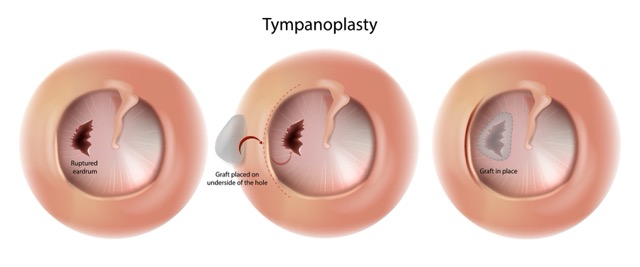
Tympanoplasty is a surgical procedure performed to repair a perforated or damaged eardrum (tympanic membrane). In some cases, the surgery also repairs or reconstructs the tiny hearing bones (ossicles) inside the middle ear if they are damaged due to chronic infection, trauma, or disease.
The procedure involves closing the hole in the eardrum using a tissue graft taken from the patient’s own body or a specially designed graft material. Repairing the eardrum helps restore hearing, prevents repeated ear infections, and protects the middle ear from water, bacteria, and other external contaminants.
For small perforations affecting only the eardrum, the procedure is commonly known as myringoplasty. When the surgery also involves repairing the middle ear structures, it is referred to as tympanoplasty.
Disease name
Surgery name
Duration
Treated by
Free Middle Ear Perforation Surgery Cost Calculator
Fill details to get actual cost
A perforated eardrum is a tear or hole in the thin membrane that separates the outer ear from the middle ear. The eardrum plays an important role in hearing by vibrating when sound waves enter the ear. These vibrations are transmitted to the tiny bones in the middle ear, allowing the brain to interpret sound.
When the eardrum develops a hole, sound transmission becomes less effective, resulting in hearing loss. The opening also allows bacteria, water, and debris to enter the middle ear, increasing the risk of repeated infections.
While some small perforations heal naturally, larger or long-standing tears often require tympanoplasty for permanent repair.
Symptoms vary depending on the size of the perforation and whether an infection is present. Common signs include:
If these symptoms persist for more than a few weeks, an ENT specialist should evaluate the condition.
A perforated eardrum can occur due to several reasons. Understanding the underlying cause helps determine the most appropriate treatment.
Chronic Ear Infections: Repeated middle ear infections create pressure behind the eardrum, eventually causing it to rupture.
Ear Trauma: Direct injury to the ear from accidents, sports injuries, or a blow to the side of the head can tear the eardrum.
Cotton Buds or Sharp Objects: Cleaning the ears with cotton swabs, hairpins, or other objects can accidentally puncture the eardrum.
Sudden Loud Noise: Exposure to explosions, fireworks, or loud blasts can rupture the eardrum due to excessive sound pressure.
Barotrauma: Rapid changes in air pressure during air travel, scuba diving, or mountain climbing can damage the eardrum.
Foreign Objects in the Ear: Children often insert small objects into the ear canal, which may injure the eardrum.
Previous Ear Surgery: Some ear surgeries may weaken the tympanic membrane, making it more prone to perforation.

Diet & Lifestyle Consultation

Post-Surgery Recovery Follow up

Free Cab Facility

24*7 Patient Support
Doctors usually recommend tympanoplasty when a perforated eardrum does not heal on its own or starts affecting hearing and quality of life.
You may need tympanoplasty if:
Early treatment helps prevent long-term hearing damage and chronic ear disease.

 The patient arrives at the hospital on the scheduled day of surgery.
Registration and admission formalities are completed.
Vital signs such as blood pressure, pulse, temperature, and oxygen levels are checked.
Hearing test results, ear examination findings, and other pre-operative investigations are reviewed.
The patient arrives at the hospital on the scheduled day of surgery.
Registration and admission formalities are completed.
Vital signs such as blood pressure, pulse, temperature, and oxygen levels are checked.
Hearing test results, ear examination findings, and other pre-operative investigations are reviewed.
 The ENT surgeon reviews the patient's ear condition, hearing loss, and surgical plan.
The anesthetist performs a final pre-anesthesia assessment.
Consent forms are signed after discussing the procedure, benefits, and possible risks.
The ear is cleaned and prepared for surgery.
An IV line is started for fluids, antibiotics, and medications.
The ENT surgeon reviews the patient's ear condition, hearing loss, and surgical plan.
The anesthetist performs a final pre-anesthesia assessment.
Consent forms are signed after discussing the procedure, benefits, and possible risks.
The ear is cleaned and prepared for surgery.
An IV line is started for fluids, antibiotics, and medications.
 The patient is taken to the operation theatre.
General anesthesia is usually administered to ensure a pain-free procedure.
The patient remains comfortable and asleep throughout the surgery.
The patient is taken to the operation theatre.
General anesthesia is usually administered to ensure a pain-free procedure.
The patient remains comfortable and asleep throughout the surgery.
 The surgeon accesses the eardrum through the ear canal or by making a small incision behind the ear.
The damaged or perforated eardrum is carefully examined.
A tissue graft, usually taken from the patient's own tissue, is placed to repair the perforation.
If required, the middle ear bones (ossicles) are repaired or reconstructed to improve hearing.
The graft is positioned securely, and the ear canal is packed with a protective dressing to support healing.
The surgeon accesses the eardrum through the ear canal or by making a small incision behind the ear.
The damaged or perforated eardrum is carefully examined.
A tissue graft, usually taken from the patient's own tissue, is placed to repair the perforation.
If required, the middle ear bones (ossicles) are repaired or reconstructed to improve hearing.
The graft is positioned securely, and the ear canal is packed with a protective dressing to support healing.
 The patient is shifted to the recovery room for monitoring.
Nurses monitor blood pressure, pulse, oxygen levels, pain control, and overall condition.
The patient is observed for dizziness, nausea, or bleeding before discharge.
Post-operative ear care instructions are explained.
The patient is shifted to the recovery room for monitoring.
Nurses monitor blood pressure, pulse, oxygen levels, pain control, and overall condition.
The patient is observed for dizziness, nausea, or bleeding before discharge.
Post-operative ear care instructions are explained.
 Most patients return home on the same day or within 24 hours after tympanoplasty.
Pain relief medicines, antibiotics (if prescribed), and ear drops are provided.
The patient is advised to keep the ear dry, avoid nose blowing, swimming, heavy lifting, and air travel until approved by the surgeon.
Follow-up appointments are scheduled to remove ear packing, assess graft healing, and perform hearing tests if required.
Patients should seek immediate medical attention if they experience severe pain, persistent dizziness, fever, heavy ear discharge, or excessive bleeding after surgery.
Most patients return home on the same day or within 24 hours after tympanoplasty.
Pain relief medicines, antibiotics (if prescribed), and ear drops are provided.
The patient is advised to keep the ear dry, avoid nose blowing, swimming, heavy lifting, and air travel until approved by the surgeon.
Follow-up appointments are scheduled to remove ear packing, assess graft healing, and perform hearing tests if required.
Patients should seek immediate medical attention if they experience severe pain, persistent dizziness, fever, heavy ear discharge, or excessive bleeding after surgery.
The type of surgery depends on the extent of damage to the eardrum and middle ear structures.
This procedure repairs only the perforated eardrum using a tissue graft. It is suitable when the middle ear bones are healthy.
If the tiny hearing bones are damaged, the surgeon repairs or replaces them with prosthetic implants while repairing the eardrum.
A minimally invasive technique performed through the ear canal using an endoscope. It offers smaller incisions, reduced pain, and quicker recovery.
Performed using an operating microscope for excellent visualization during complex ear reconstruction procedures.
The ENT surgeon recommends the most suitable technique after evaluating the patient’s ear condition.
Tympanoplasty offers several long-term benefits beyond repairing the eardrum.
These include:
Most patients experience noticeable improvement in hearing once healing is complete.
An accurate diagnosis is essential before planning surgery. The ENT specialist performs a detailed examination to determine the size, location, and severity of the perforation.
Diagnostic tests may include:
An otoscope is used to examine the ear canal and identify the perforation.
Measures the movement of the eardrum and evaluates middle ear function.
Assesses the degree of hearing loss and determines whether surgery is likely to improve hearing.
Evaluates how well the patient understands speech at different sound levels.
If there is persistent discharge, a sample may be tested to identify bacterial infection before surgery.
In complicated or chronic cases, imaging helps evaluate middle ear structures and detect additional damage.
Following these investigations, the ENT surgeon discusses the most appropriate surgical technique, expected outcomes, possible risks, and recovery timeline before scheduling the procedure.
Proper preparation helps reduce the risk of complications and supports faster recovery.
Before surgery, your doctor may advise you to:
Following your surgeon’s instructions carefully can help improve surgical outcomes.
Most patients recover well after tympanoplasty, although complete healing of the eardrum takes several weeks.
First 24 Hours
First Week
2â3 Weeks
6â12 Weeks
Recovery time may vary depending on the size of the perforation and whether ossicular reconstruction was performed.
Following post-operative instructions is essential for successful healing.
Proper post-operative care significantly improves graft success and long-term hearing outcomes.
Tympanoplasty is considered a safe and highly successful procedure. However, like any surgery, it carries some potential risks.
Possible complications include:
Choosing an experienced ENT surgeon and following post-operative care instructions greatly reduces these risks.
Small perforations may heal naturally within a few weeks. Larger or persistent perforations often require tympanoplasty for permanent repair.
You may have mild pain and discomfort for the first 24 hours after the surgery, but generally, they are manageable through over-the-counter medicines, such as painkillers, anti-inflammatories, etc. However, in case the pain is too severe, you can contact your ENT surgeon for a check-up.
Your hearing will start coming back about a week after the surgery, but complete recovery will take 2-3 months. Your surgeon will conduct a hearing assessment at the 12-week mark to evaluate the overall improvement in your hearing after the surgery.
Generally, hearing problems do not recur after a tympanoplasty. However, in rare cases, the patient may experience some loss of hearing if they suffer from another trauma or if the graft does not heal properly. In these cases, you may need to get tympanoplasty surgery again.
Untreated perforations may lead to repeated infections, worsening hearing loss, chronic ear disease, or damage to the middle ear structures.
Yes, since tympanoplasty is medically necessary to restore hearing after eardrum perforation and injury, it is usually covered by most major health insurance providers. You can check the terms of your policy to find out the extent of your coverage.
Normally, very small tears in the eardrum heal on their own but moderate to severe tears do not heal on their own. Therefore, if they are not adequately managed in time, the patient becomes vulnerable to recurrent ear infections, permanent hearing loss, and other related issues.



Dinesh reddy

 Recommends
She was very patient and clear while explaining the issue . I recommend her
Shivappa Biradar
Recommends
I am happy with the treatment.
Aakriti
Recommends
The doctor handled the ear surgery professionally and recovery went well
Sonika
Recommends
After treatment now my hearing problem got solved and feeling much better
Sajal
Recommends
Hearing has been improved
.svg)








.svg)
.svg)