Select City

Hysterectomy can offer long-term relief from painful symptoms like heavy bleeding, fibroids, and chronic pelvic discomfort. If you’ve been struggling for years without improvement, uterus removal may finally bring comfort, confidence, and a healthier quality of life. Explore safe, expert-led treatment options with modern surgical techniques.
Hysterectomy can offer long-term relief from painful symptoms like heavy bleeding, fibroids, and ... Read More



Free Cab Facility

No-Cost EMI

Support in Insurance Claim

1-day Hospitalization

USFDA-Approved Procedure
Choose Your City
It help us to find the best doctors near you.

Bangalore
Chennai
Delhi
Hyderabad
Indore
Kolkata
Mumbai
Pune
Delhi
Hyderabad
Pune
Mumbai
Bangalore
 Pristyn Care Elantis Hospital, Lajpat Nagar, Delhi
Pristyn Care Sheetla Hospital, Sector 8, Gurgaon
Pristyn Care Sheetla, New Railway Rd, Gurugram
Pristyn Care Archana Hospital, Madeenaguda, Hyderabad
Pristyn Care Elantis Hospital, Lajpat Nagar, Delhi
Pristyn Care Sheetla Hospital, Sector 8, Gurgaon
Pristyn Care Sheetla, New Railway Rd, Gurugram
Pristyn Care Archana Hospital, Madeenaguda, Hyderabad
Hysterectomy is a surgical procedure to remove the uterus and the attached cervix. Uterus removal is a common treatment option considered for several medical conditions that affect the woman’s reproductive organs. These medical conditions include fibroids, cysts, endometriosis, pelvic pain, adenomyosis, uterine prolapse, cancer of the uterus or ovaries, etc.
After a hysterectomy, a woman will not be able to get pregnant or menstruate. Some procedures involve the removal of both ovaries and the uterus. Depending on the cause for undergoing the surgery, the hysterectomy operation may involve the removal of surrounding tissues and organs, like, fallopian tubes(salpingectomy) and ovaries(oophorectomy).
Disease name
Surgery name
Duration
Treated by
Free Hysterectomy Surgery Cost Calculator
Fill details to get actual cost
Also called a total hysterectomy, it is the most common type of uterus removal surgery and entails the complete removal of the uterus and cervix. Total hysterectomy is often performed for medical conditions, such as fibroids, cancer, and endometriosis.
The removal of the uterus through the vagina is referred to as the vaginal hysterectomy. The ovaries, fallopian tubes, upper vagina, blood arteries, and connective tissue that support the uterus are all removed by the surgeon during a vaginal hysterectomy. The uterus is then removed by the surgeon. The procedure involves fewer complications, leaves fewer scars, and has a shorter recovery period.
This type of hysterectomy removes the uterus(womb), while leaving the cervix(neck of your womb) intact. Heavy or painful periods, fibroids(overgrown muscles of the womb), endometriosis, and abnormal vaginal bleeding are common medical conditions that require a subtotal hysterectomy. It helps to improve or cure your symptoms.
The procedure is always done through the abdomen and removes only the upper part of the uterus. The lower part of the uterus(cervix) is not removed, and the fallopian tubes and ovaries may or may not be removed.
Radical hysterectomy is used to treat several kinds of gynaecological cancers, including cervical cancer and ovarian cancer. During the procedure, the cervix, a part of the vagina, and the parametrium(connective tissue surrounding the cervix) are removed. If required, the doctor may also remove fallopian tubes, ovaries, and the lymph nodes.
This procedure involves the removal of fallopian tubes(salpingectomy) and ovaries(oophorectomy). The doctor may recommend the removal of the ovaries only if there is a significant risk of chronic health conditions, such as cancer.
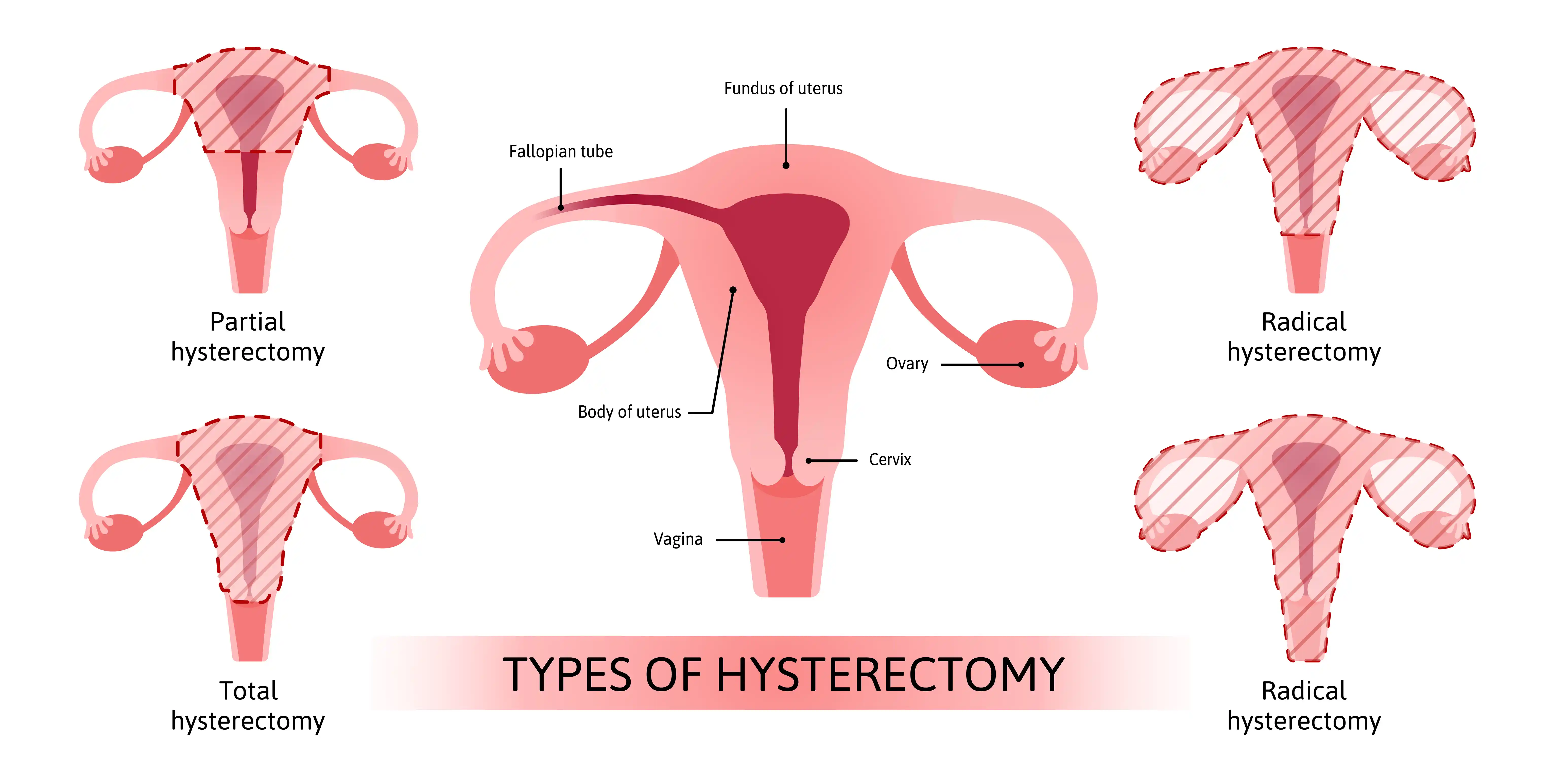
To determine if a hysterectomy is needed, your doctor will check your medical history and symptoms and conduct a physical exam. For conditions like fibroids, endometriosis, pelvic pain, and certain cancers, several tests may be performed, including:
What Happens During a Hysterectomy?
 Step 1 · 30–60 mins
Hospital Admission
 Patient arrives at the hospital at the scheduled time.
Registration and admission formalities are completed.
Vital signs (blood pressure, pulse, temperature, and oxygen level) are checked.
The gynecologist reviews the patient's medical history, imaging reports, blood tests, and surgical plan.
Patient arrives at the hospital at the scheduled time.
Registration and admission formalities are completed.
Vital signs (blood pressure, pulse, temperature, and oxygen level) are checked.
The gynecologist reviews the patient's medical history, imaging reports, blood tests, and surgical plan.
 Step 2 · 30-45 mins
Pre-surgery Preparation
The gynecologist performs a final evaluation and confirms the type of hysterectomy (laparoscopic, vaginal, robotic-assisted, or abdominal).
The anesthetist reviews the patient's condition.
Consent forms are signed.
The surgical area is cleaned and prepared.
An IV line is started for fluids and medications.
 Step 3 · 10–15 mins
Anesthesia Administration
The patient is taken to the operation theatre.
General anesthesia is administered.
The patient becomes fully asleep and pain-free before the surgery begins.
 Step 4 · 1–3 hours
Hysterectomy Procedure Begins
The surgeon accesses the uterus through small abdominal incisions (laparoscopic/robotic), the vagina (vaginal hysterectomy), or an abdominal incision, depending on the planned approach.
The uterus is carefully separated from the surrounding tissues and blood vessels.
Depending on the medical condition, the cervix, fallopian tubes, and ovaries may also be removed if required.
Bleeding is controlled, and the surgical site is checked before the incisions are closed with sutures or surgical staples.
Sterile dressings are applied to the incision sites.
 Step 5 · 2–4 hours
Recovery Room Observation
The patient is shifted to the recovery room.
Nurses monitor blood pressure, pulse, oxygen level, pain levels, and overall comfort.
The urinary catheter and IV fluids are managed as needed during the initial recovery period.
Once fully awake and stable, the patient is encouraged to begin gentle movement as advised by the medical team.
 Step 6 · Within 1–3 Days (Laparoscopic/Vaginal) or 3–5 Days (Open Surgery)
Discharge
Hospital stay depends on the surgical approach and the patient's recovery.
Pain medications, wound care instructions, and activity guidelines are provided.
The patient is advised to avoid heavy lifting, strenuous activities, and sexual intercourse until cleared by the gynecologist.
A follow-up appointment is scheduled to monitor healing, review the pathology report (if applicable), and guide recovery.
Endometriosis refers to a condition in which the endometrial cells that make up the lining of the uterus grow outside the uterus. These cells usually grow in the ovaries, bowel, uterus, fallopian tubes, and bladder. Endometriosis causes pain and discomfort, along with bleeding during periods. It may also cause scarring, infertility, and the sticking together of organs and tissues.
With age, the muscles that keep a woman’s vagina or birth canal in place weaken and sag, causing the prolapse. During prolapse, the uterus may pull down the pelvic organs, including the rectum, urethra, vagina, and bladder. Over time, they prolapse from their normal place and push against the walls of the vagina. Some women experience a heavy or dragging sensation in the pelvic area as prolapse worsens.
A hysterectomy removes the organs that have cancer. It is done to prevent the cancer from spreading. Hysterectomy is proven to be an effective treatment option for various gynaecological cancers, including uterine and cervical cancer.
Fibroids are non-cancerous growths originating from the muscular wall of the uterus. Uterine fibroids are also known as the myomas or uterine leiomyomas and are the most common type of cancer found in the female reproductive system. Fibroids may cause heavy bleeding, extreme pelvic discomfort, and pain in women, necessitating a hysterectomy.
Hysterectomy is required if the uterus is blocking the bladder or intestines.

Diet & Lifestyle Consultation

Post-Surgery Recovery Follow up

FREE Cab Facility

24*7 Patient Support
The following are the common side effects of uterus removal surgery:-
You may also experience the symptoms of menopause, such as hot flashes, loss of libido, insomnia, vaginal dryness, if the ovaries are removed and you have not already gone through menopause.
Vaginal hysterectomy
Vaginal laparoscopic hysterectomy
Abdominal laparoscopic hysterectomy
Robotic-assisted laparoscopic hysterectomy
| Advantages | Disadvantages |
| Long-term solution for medical conditions, including fibroids, endometriosis, uterine prolapse, gynaecological cancers, etc. | Permanent loss of fertility. A woman can’t become pregnant after a uterus removal surgery |
| Addresses severe pelvic pain | Surgical risks such as bleeding, infection, or injury to the nearby organs |
| Treats heavy and irregular bleeding | Long recovery time(usually 4-8 weeks, depending on surgery) |
| Reduced risk of uterine and cervical cancers | Long-term complications, such as vaginal dryness and pelvic floor weakness |
| Improves quality of life | You may experience hormonal issues because the ovaries have been removed(surgical menopause) |
Yes. Most insurance companies in India offer coverage for hysterectomy surgery, irrespective of the type of hysterectomy the patient is scheduled for. A hysterectomy or uterus removal surgery is only recommended in medically necessary scenarios, i.e., when the uterine issues can not be resolved through conservative methods and there’s a risk to the patient’s well-being. Therefore, patients can claim insurance for their uterus removal surgery.
The insurance coverage provided by different insurance companies for hysterectomy surgery varies. The amount one can claim may also differ based on the terms and conditions of the policy. So, it is important that the patient get a proper understanding of the coverage they’ll receive for their treatment from the insurance provider in advance.
At Pristyn Care, we provide complete assistance to patients in the insurance claim process so that they can claim the maximum amount for their hysterectomy surgery. To get your uterus removal surgery done at Pristyn Care, contact our team and schedule your appointment with our expert gynecologists. Call us today.
Know more: Is Uterus Removal Surgery (Hysterectomy) covered under Insurance?
No, conceiving after undergoing a hysterectomy is not possible. This surgery involves the removal of the womb or uterus, which is essential for pregnancy. Thus, if you are considering having children, discussing this with your doctor before proceeding with the surgery is important.
Lap hysterectomy uses a laparoscope to remove the uterus using several small incisions in the abdomen. It is a minimally invasive procedure and leads to fewer scars, reduced pain, and faster recovery.
Hysterectomy doesn’t affect or trigger menopause unless the ovaries are removed during the surgery. If the ovaries are removed during the procedure, the patient may enter menopause after the surgery. Some women may also experience symptoms, such as hot flashes, vaginal dryness, and mood swings.
Depending on the type of surgery, the uterus removal surgery recovery time varies. A laparoscopic hysterectomy has a shorter recovery time(2-3 weeks) than the traditional hysterectomy procedures(6-8 weeks).
Yes, sexual intercourse is possible after recovering from a hysterectomy. Some women report an improvement in their sex life after the procedure, mainly if the surgery was done to rectify a painful condition. However, it’s essential to follow your doctor’s advice on when to resume sexual activity.
Even though a hysterectomy often preserves the ovaries, some women may experience hormonal changes following the procedure. These include mood swings, hot flashes, and vaginal dryness. Your doctor might suggest hormonal replacement therapy to address the symptoms.
Depending on the type of surgery, the location, and the surgeon’s expertise, the cost of the hysterectomy procedure varies. You must also note that a laparoscopic hysterectomy usually costs more than an abdominal or vaginal one.
If the cervix is removed during the hysterectomy procedure, the risk of developing cervical cancer is significantly reduced but not eliminated. Regular screenings are still recommended, especially for women with a history of abnormal cervical screening results.
If your ovaries are also removed during the hysterectomy (a procedure referred to as oophorectomy), then you may experience sudden menopause. In such cases, doctors often recommend HRT to help manage the menopausal symptoms. However, if your ovaries were not removed during the surgery, they will continue to produce hormones and HRT might not be necessary.
While complete bed rest isn’t mandatory after a hysterectomy, patients are advised to rest for at least 4 to 6 weeks after the surgery or till they’re fully recovered and fit to get back to their routine. Activities of any sort (walking, weight lifting, etc.) should be avoided for a few weeks following the surgery.



Sakshi

 Recommends
Symptoms improved after surgery and recovery was steady.
Kartika
Recommends
Heavy bleeding and pain improved after surgery and recovery was comfortable.
kritika bhatnagar
Recommends
my mother-in-law is now very comfortable and relaxed , the staff was really helpful
Anushka
Recommends
Recovery took time but symptoms improved a lot.
Khusboo Bansal
Recommends
Services was maintained properly
Sateesh
Recommends
Pain during urination reduced after treatment.
.svg)









.svg)
.svg)