Select City

Call Us
Book FREE Appointment
Ovarian Cyst Surgery is a specialised surgical procedure designed to address and remove cysts from the ovaries effectively. These cysts can range from benign growths that cause discomfort to more serious conditions that may affect fertility and overall reproductive health.
Ovarian Cyst Surgery is a specialised surgical procedure designed to address and remove ...cysts from the ovaries effectively. These cysts can range from benign growths that cause discomfort to more serious conditions that may affect fertility and overall reproductive health. Read More



3M+
Happy Patients
50+
Disease
200+
Hospitals
30+
Cities

Free Cab Facility

No-Cost EMI

Support in Insurance Claim

1-day Hospitalization

USFDA-Approved Procedure
Choose Your City
It help us to find the best doctors near you.

Bangalore
Chennai
Delhi
Hyderabad
Indore
Kolkata
Mumbai
Pune
Delhi
Hyderabad
Pune
Mumbai
Bangalore
 Doctor Not Found
4.5/5
32 Years Experience
 Pristyn Care Sheetla Hospital, Sector 8, Gurgaon
4.9/5
24 Years Experience
Pristyn Care Sheetla, New Railway Rd, Gurugram4.5/5
10 Years Experience
Pristyn Care Archana Hospital, Madeenaguda, Hyderabad4.5/5
9 Years Experience
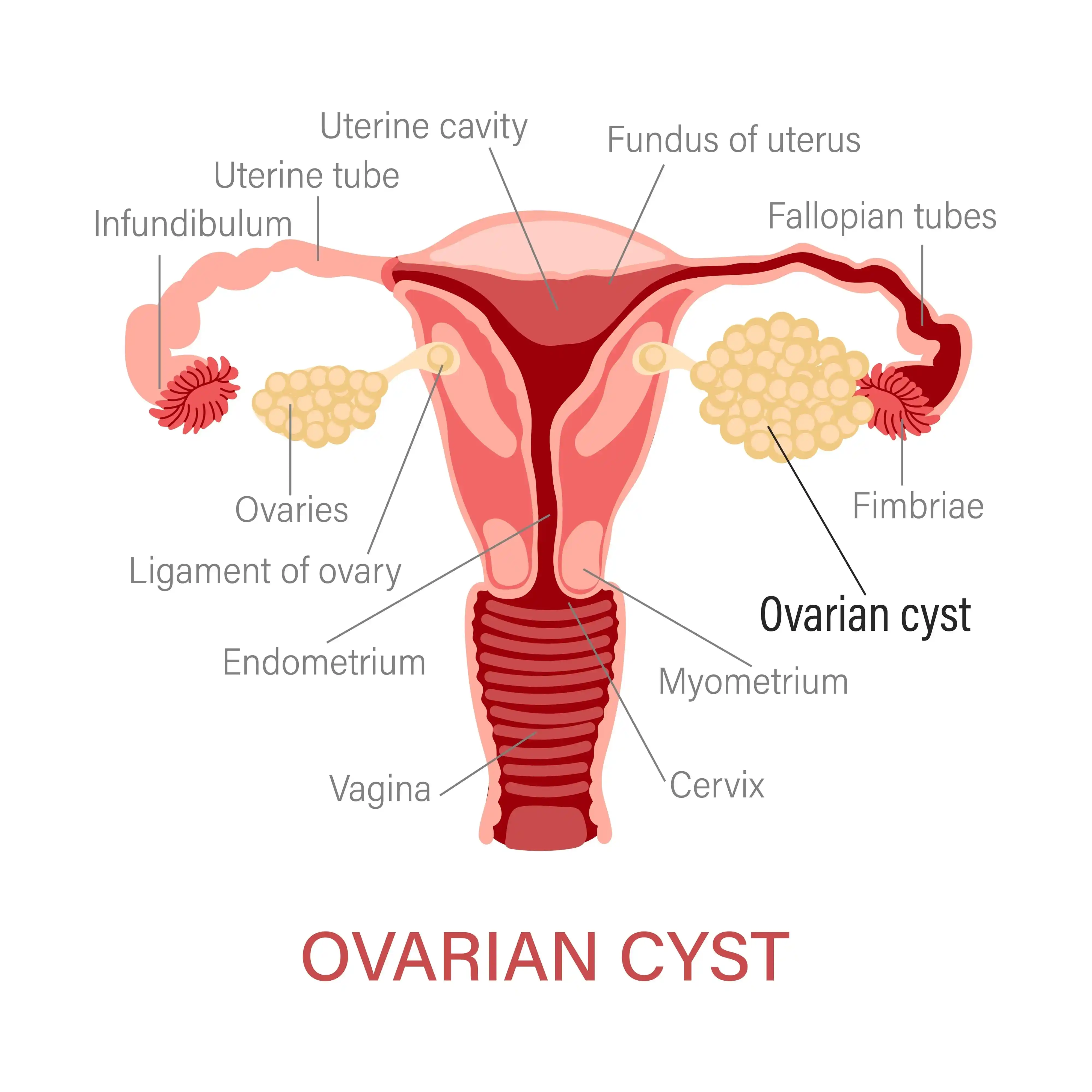
Pristyn Care, Eminent Hospital, 6/1, Manorama Ganj, opp. Barwani Plaza Residential Road, Near Eureka Hospital, Old Palasia, Indore, Madhya Pradesh 452018Ovarian cysts are fluid-filled sacs or pockets that develop inside an ovary or on its surface. Every woman has two ovaries located on each side of the uterus. Ovaries produce eggs and secrete essential hormones such as estrogen and progesterone, essential for overall reproductive health. Usually, ovarian cysts are formed during the menstrual cycle, and hence are most common in women who have not undergone menopause. It is a common condition that a woman may experience at some point in their life. Sometimes these cysts rupture, leading to a medical condition called an ovarian cyst burst.
According to NCBI, most ovarian cysts in women of reproductive age are functional and non-cancerous.
Although some ovarian cysts may cause discomfort and complications, and may also go away on their own within a few months.
Disease name
Surgery name
Duration
Treated by
Free Ovarian Cyst Surgery Cost Calculator
Fill details to get actual cost
Most ovarian cysts are harmless and don’t cause pain. However, an ovarian cyst is likely to cause pain if it has become large and interferes with the ovarian blood supply. The following are the common ovarian cyst symptoms.
Follicular cysts develop when the follicle(sac containing the egg) fails to release the egg during the menstrual cycle. Instead, it continues to grow and develops into a cyst. These kinds of cysts are usually small(<2 inches) and go away on their own within a few menstrual cycles.
During ovulation, after the egg is released from the follicle, the remaining sac transforms into a structure called the corpus luteum, which produces hormones necessary for maintaining a pregnancy. However, when the corpus luteum is filled with fluid or blood instead of dissolving, it develops into a corpus luteum cyst.
These kinds of cysts are made up of several types of tissues, such as hair, skin, and teeth. They are also known as teratomas and can vary in size. Although dermoid cysts are usually benign, they can cause complications if they grow large enough to put pressure on surrounding organs.
This kind of ovarian cyst has been associated with causing endometriosis. Endometriosis is a condition in which tissue resembling the uterus lining grows outside the uterus. Endometriomas are difficult to diagnose and are often filled with dark, thick blood. They can cause pelvic pain and other fertility-related issues. Surgical intervention becomes necessary when they become large and painful.
They are very large cysts and develop from the cells on the outer surface of the ovaries. Cystadenomas can be filled with a mucus-like or water-like fluid and can grow large enough to cause discomfort. Although in most cases, cystadenomas are non-cancerous, a few of these may develop into ovarian cancer, which requires close monitoring and surgical removal.
This condition is associated with hormonal imbalances and is characterised by the presence of several small cysts in the ovaries. Other common symptoms include irregular menstrual cycles, excessive weight gain, fertility-related issues, etc. Not all women with polycystic ovaries will have cysts; therefore, a proper diagnosis is required to address associated health risks.
The normal size of an ovarian cyst is less than 5 mm. While functional cysts are usually harmless, pathological cysts are less common and may require further diagnosis for confirmation.
Hormones play an important role in maintaining the normal functioning of the ovaries. When the estrogen and progesterone hormones are out of balance, it can disrupt the menstrual cycle and may lead to the formation of ovarian cysts.
When tissues similar to the uterus lining grow outside the uterus, it leads to the development of a medical condition called endometriosis. Also, when these tissues attach to the ovaries, they may form endometriomas, a type of ovarian cyst. These cysts are painful and may cause infertility in some women. Women struggling with endometriosis are more prone to developing ovarian cysts.
Ovarian cysts may also form during pregnancy. The follicle that released the egg may continue to grow and develop into a cyst after an egg is fertilised and implants in the uterus.
Pelvic infections can spread to the ovaries and lead to the formation of ovarian cysts. Also, in some cases, infections in the reproductive organs may cause abscesses that may form into cyst-like structures. If left untreated, they may cause pain and lead to serious complications.
Hormonal imbalance, genetic issues, or other fertility-related concerns are a few of the medical conditions that may lead to the development of ovarian cysts.
PCOS is a hormonal disorder that may cause the ovaries to develop multiple small cysts. Women struggling with PCOS may also experience irregular periods, excessive male hormones(androgens), and difficulties during ovulation.

Diet & Lifestyle Consultation

Post-Surgery Recovery Follow up

FREE Cab Facility

24*7 Patient Support
| Type | Size | Symptoms | Treatment |
| Small Cysts | Less than 5 cm | Mostly asymptomatic | Usually resolve on their own and do not require treatment |
| Medium Cysts | 5 – 10 cm | Mild symptoms, such as pelvic pain and pain during intercourse | Can be harmless but require monitoring |
| Large Cysts | >10 cm | Abdominal fullness, bloating, pelvic pain, frequent urination/bowel movements | May cause rupture and requires surgical intervention |
| Giant Cysts | >15 cm | Severe pain, bloating, and breathing difficulties | These are rare kinds of cysts and require immediate medical intervention |
When a woman has an ovarian cyst that needs surgery, doctors may choose between two main types of procedures: cystectomy and oophorectomy. Both are ovarian cyst treatments, but they are different in how much of the ovary is removed.
In a cystectomy, only the cyst is removed, and the healthy part of the ovary is saved. This is often done for women who still want to have children. In an oophorectomy, the entire ovary and the cyst are removed. This may be needed if the cyst is too large, looks dangerous, or if there is a risk of cancer.
The table below shows the main differences between cystectomy and oophorectomy:
| Feature | Cystectomy | Oophorectomy |
| What is removed | Only the cyst | The whole ovary (and cyst) |
| Ovary is saved? | Yes | No |
| Fertility after surgery | Usually not affected | May reduce fertility if both ovaries are removed |
| Who may need it? | Women with non-cancerous cysts | Women with large, twisted, or cancerous cysts |
| Recovery time | Shorter | May take longer |
| Hormone changes | No major changes | Possible changes, especially if both ovaries are removed |
| Risk of future cysts | Cysts may come back | No cysts on that ovary (because it is removed) |
Depending on the intensity of the pain and other associated symptoms, the doctor may recommend the following tests to confirm the diagnosis.
A pelvic exam can detect ovarian cysts by feeling for lumps, size, and firmness in the pelvis. However, many ovarian cysts are too small to feel, and an ultrasound is usually performed after a pelvic exam to provide a final diagnosis
Ultrasound examination uses high-frequency sound waves to generate an image of the internal organs. This test helps to identify the size, composition, and location of the cyst.
During the laparoscopy, your doctor makes small incisions to insert the laparoscope. A laparoscope is a thin, narrow tube with a camera on the end, and is inserted to visualize the cyst and examine its characteristics.
A blood test is done to check the presence of the amount of a protein called CA125. Increased levels of CA125 indicate the possibility of ovarian cancer. However, it may also indicate other underlying medical conditions, such as abdominal infection, hepatitis, pregnancy, and pelvic infection.
Additional diagnostic tests are done if ovarian cancer is suspected.
Your doctor may monitor the growth of the cyst for a period of time, and examine if it goes away on its own or changes.
Your doctor may suggest medications to address the pain caused by the ovarian cyst. He may also prescribe certain painkillers and other hormonal treatments to treat the existing cysts and prevent the formation of new ones.
Simple fluid-filled cysts are usually treated with this non-surgical technique. To drain the fluid, an ultrasound is used to guide a needle into the cyst. Despite being less invasive, it is not appropriate for solid or complicated cysts and has a recurrence risk.
Ovarian cysts that are large, cause serious symptoms, and don’t go away on their own may require surgery. Depending on your condition, the doctor may remove just the cyst or the entire ovary.
Laparoscopic Ovarian Cystectomy
This minimally invasive surgical technique keeps the ovary intact while removing ovarian cysts. A tiny incision is created, and the cyst is found and removed using a laparoscope. A laparoscope is a narrow tube equipped with a camera. This approach is useful to treat benign cysts because it ensures a speedier recovery, minimal scarring, and a lower chance of complications.
A laparotomy is carried out when the cyst is big, perhaps malignant, or has complications, including rupture or torsion. To remove the cyst or, if needed, the entire ovary, a bigger abdominal incision is made during this open procedure. Compared to laparoscopy, recovery is longer, but in complicated circumstances, it offers a better perspective.
One or both ovaries may be removed during this operation. It is usually advised for cysts that are malignant or have seriously harmed the ovary. It may be performed by laparotomy or laparoscopy, depending on the circumstances. Removal of both ovaries, or bilateral oophorectomy, may impact hormone levels and fertility, requiring further treatment.
The patient may experience pain, cramps, and soreness in the abdomen after the surgery. Depending on the type of surgery, open or laparoscopic, the severity of pain may vary.
Some may experience mild constipation and bloating after the surgery. Bloating is more common after laparoscopic surgery as the procedure uses gas to expand the abdominal area.
You may experience a delayed menstrual cycle, too light or too heavy bleeding, and sometimes, even spotting after the surgery. The menstrual cycle may need a few months to become regular.
Removal of the ovaries affects the hormonal balance, and the patient may experience mood swings, hot flashes, and other premenstrual symptoms.
Yes, many women can still get pregnant after ovarian cyst surgery. It depends on the type of surgery and the condition of the ovaries.
Common ruptured ovarian cyst symptoms include sudden, sharp pain on one side of the pelvic area, pain in the lower abdomen, nausea, bleeding, and light vaginal bleeding or spotting.
A left ovarian cyst refers to the fluid-filled sac on your left ovary. Usually they are harmless and resolve on their own.
Yes. The right ovarian cyst is a type of functional cyst, and you can get pregnant with it. Also, most functional cysts are temporary, the chances of being pregnant depend on the type of cyst, its size, and location.
Hemorrhagic ovarian cysts are usually not dangerous, but require medical intervention if they cause severe pain, bleeding, or ovarian torsion.
Laparoscopic procedures typically result in small scars that fade over time, while open surgeries may leave a larger scar, though efforts are made to minimise it.
Although technically feasible, most surgeons prefer to avoid operating during menstruation due to increased bleeding risk and patient discomfort.
Hormonal therapy may be recommended to prevent recurrence, particularly in cases associated with hormonal imbalances or polycystic ovary syndrome (PCOS).
Patients are generally advised to avoid solid food for 8–12 hours prior to surgery and adhere to the specific preoperative dietary instructions provided by the surgeon.
Menstrual cycles may temporarily fluctuate following surgery, but usually stabilise within a few weeks, especially if the ovaries are preserved.
While asymptomatic, small, and simple cysts may not require immediate intervention, delaying surgery for complex or enlarging cysts may pose risks.
The cost of ovarian cyst surgery in India typically ranges from ₹40,000 to ₹2,00,000, depending on the size of the cyst, type of surgery, hospital, surgeon’s expertise, and city.
An ovarian cyst may require surgery if it is larger than 5–10 cm, causes symptoms, continues to grow, appears suspicious for cancer, or leads to complications such as ovarian torsion or rupture.



 BU
BUBurra, 38 Yrs

 Recommends
Recommends
All doctors are good and caring at prystine
.svg) PR
PRPratibha
Recommends
Recommends
good doctor and services
.svg) MA
MAMadhavi
Recommends
Recommends
Treatment felt right at that time
DADarshika
Recommends
Recommends
thanks to doctor and staff
MManisha
Recommends
Recommends
I was worried after being diagnosed with an ovarian cyst, but the gynecology team guided me properly. The treatment experience was smooth and the doctors were very reassuring
SRSneha Rana
Recommends
Recommends
Best hospital
.svg)
Avail FREE Doctor Consultation

Consult with our expert surgeon for more than 50+ diseases

Once you share your details, our care coordinator will get in touch with you.

The coordinator will understand your symptoms and health condition in detail.

Your consultation will be scheduled at the earliest.
3M +
Happy Patients
150 +
Clinics
30 +
Cities

120Cr—Patient Savings Delivered
so patients focus on recovery, not bills.

Complete Transparency
No hidden charges or surprise bills

End-to-End Insurance Handling
Complete insurance processing support

Up to 20% Savings on Every Surgery
powered by smarter insurance handling

Easy EMI Options
Flexible payment plans available
120Cr—Patient Savings Delivered
so patients focus on recovery, not bills.
Complete Transparency
No hidden charges or surprise bills
Your Form Has Been Submitted Successfully.
Our care coordinator will call you shortly.


Book Your FREE Consultation
Consult with our expert surgeon for more than 50+ diseases
Once you share your details, our care coordinator will get in touch with you.
The coordinator will understand your symptoms and health condition in detail.
Your consultation will be scheduled at the earliest.
3M +
Happy Patients
150 +
Clinics
30 +
Cities
)