Select City
location
Get my Location
search icon
phone icon in white color

Call Us

Book FREE Appointment

Circumcision Open Treatment | PristynCare

Circumcision is a surgical procedure to remove the foreskin (prepuce) of the penis. It is performed for medical, religious, or personal reasons and is one of the most commonly performed male surgical procedures worldwide.

Circumcision is a surgical procedure to remove the foreskin (prepuce) of the penis. ... Read More


anup_soni_banner
Book FREE Doctor Appointment
cost calculator
Anup Soni - the voice of Pristyn Care pointing to download pristyncare mobile app
i
i
i
i
Call Us
We are Rated
3 M+ Happy Patients
200+ Hospitals
30+ Cities

To confirm your details, please enter OTP sent to you on *

i

30+

Cities

Free Cab Facility

Free Cab Facility

No-Cost EMI

No-Cost EMI

Support in Insurance Claim

Support in Insurance Claim

1-day Hospitalization

1-day Hospitalization

USFDA-Approved Procedure

USFDA-Approved Procedure

Circumcision Doctors Near You

Choose Your City

It help us to find the best doctors near you.

Ahmedabad

Bangalore

Bhubaneswar

Chandigarh

Chennai

Coimbatore

Delhi

Gurgaon

Hyderabad

Indore

Jaipur

Kochi

Kolkata

Kozhikode

Lucknow

Madurai

Mumbai

Patna

Pune

Raipur

Ranchi

Thiruvananthapuram

Vijayawada

Visakhapatnam

Delhi

Hyderabad

Pune

Mumbai

Bangalore

  • online dot green
    Dr. Galla Murali Mohan - A general-surgeon for Laser Circumcision

    Dr. Galla Murali Mohan

    MBBS, MS-General Surgery
    34 Yrs.Exp.

    5.0/5

    34 Years Experience

    location icon Pristyn Care Archana Hospital, Madeenaguda, Hyderabad
    Call Us
    080-6542-3724
  • online dot green
    Dr. Vipin Nagpal - A general-surgeon for Laser Circumcision

    Dr. Vipin Nagpal

    MBBS, MS-General Surgery
    31 Yrs.Exp.

    5.0/5

    31 Years Experience

    location icon Pristyn Care Elantis Hospital, Lajpat Nagar, Delhi
    Call Us
    080-6542-3711
  • online dot green
    Dr. Rakesh Shivhare - A general-surgeon for Laser Circumcision

    Dr. Rakesh Shivhare

    MBBS, MS(GI & General Surgeon)
    30 Yrs.Exp.

    5.0/5

    30 Years Experience

    location icon Opp.Badwani Plaza, Manorama Ganj, Old Palasia, Indore, Madhya Pradesh 452003
    Call Us
    080-6542-3720
  • online dot green
    Dr. Velkour Harish Kumar & Team - A urologist for Laser Circumcision

    Dr. Velkour Harish Kumar...

    MBBS, MS-General Surgery, DNB-Urologist
    30 Yrs.Exp.

    4.5/5

    30 Years Experience

    location icon Pristyn Care ZOI Hospital, Ameerpet, Hyderabad
    Call Us
    080-6542-3712

Circumcision Surgery

Circumcision is a surgical procedure to remove the foreskin (prepuce) of the penis. Open circumcision is performed under local or general anesthesia and involves cutting and removing the foreskin using a scalpel or scissors. Medical indications include phimosis (tight foreskin), paraphimosis, recurrent balanitis, and balanoposthitis. It is also performed for religious and cultural reasons, and as an elective procedure for personal hygiene preference. Open circumcision is a safe, effective procedure with high success rates. Pristyn Care provides adult and paediatric circumcision by experienced urologists with comprehensive care and quick recovery.

cost calculator

Free Laser Circumcision Surgery Cost Calculator

Fill details to get actual cost

i
i
i

To confirm your details, please enter OTP sent to you on *

i

Symptoms

Medical indications and symptoms that may require circumcision include:

  • Phimosis: The foreskin cannot be retracted over the head of the penis due to tightness
  • Paraphimosis: The retracted foreskin becomes trapped and cannot return to its normal position
  • Recurrent balanitis or balanoposthitis: Repeated infections of the foreskin and glans
  • Lichen sclerosus: A chronic skin condition causing scarring and tightening of the foreskin
  • Redundant or excessive foreskin causing hygiene difficulties
  • Recurrent urinary tract infections in children associated with a tight foreskin

Are you going through any of these symptoms?

Causes

Conditions and reasons that lead to open circumcision include:

  • Phimosis — the most common medical indication; the foreskin is too tight to retract normally
  • Recurrent foreskin infections (balanitis, balanoposthitis) that do not respond to medical treatment
  • Lichen sclerosus causing progressive foreskin scarring and tightening
  • Paraphimosis — a urological emergency where the retracted foreskin gets stuck
  • Elective circumcision for religious, cultural, or personal hygiene reasons

Types of Circumcision

Open circumcision can be performed using different techniques:

  • Sleeve resection technique: The foreskin is excised circumferentially using scissors or a scalpel; the most common technique for adults
  • Dorsal slit technique: A single cut along the top of the foreskin before circumferential removal; used for tight phimotic foreskins
  • Plastibell technique: A plastic device is placed under the foreskin before cutting; commonly used for neonatal circumcision
  • Preputioplasty: A less radical alternative for mild phimosis that widens rather than removes the foreskin

Pristyn Care’s Free Post-Operative Care

Diet & Lifestyle Consultation

Post-Surgery Recovery Follow up

Free Cab Facility

24*7 Patient Support

Risk Factors

Factors that increase the likelihood of requiring circumcision include:

  • Congenital phimosis — tight foreskin from birth that does not improve with age
  • Recurrent balanitis or balanoposthitis due to poor hygiene or diabetes
  • Lichen sclerosus (BXO) — a progressive scarring condition affecting the foreskin
  • Diabetes mellitus, which increases the risk of foreskin infections
  • Poor genital hygiene leading to recurrent inflammation
  • Anatomical predisposition to foreskin problems

Who Needs Circumcision?

Circumcision is recommended for adults and children with medical conditions such as phimosis, recurrent balanitis, paraphimosis, or lichen sclerosus that have not responded to conservative treatments such as topical steroid creams. It is also performed electively for religious, cultural, or personal hygiene reasons. A urologist will evaluate the foreskin condition and recommend circumcision after discussing non-surgical alternatives where appropriate.

Diagnosis

Diagnosis before circumcision includes:

  • Clinical examination: Assessment of the foreskin for phimosis grade, signs of infection, scarring, or skin conditions
  • Urine culture: To identify any active urinary tract infection requiring treatment before surgery
  • Skin biopsy: For suspected lichen sclerosus (BXO) to confirm the diagnosis before surgery
  • Blood glucose testing: To screen for diabetes in adults with recurrent balanitis

Circumcision Treatment

Open circumcision is performed under local anesthesia (penile block) for adults or general anesthesia for children. The surgeon removes the foreskin circumferentially, leaving sufficient inner mucosal skin for comfortable healing. Bleeding is controlled with electrocautery or sutures. The procedure takes 20 to 45 minutes. Pristyn Care provides adult and paediatric circumcision by experienced urologists using precise technique to ensure a clean cosmetic result and optimal healing.

Circumcision Procedure Steps

  1. Anesthesia: Local anesthesia (penile block) for adults or general anesthesia for children is administered
  2. Preparation: The operative area is cleaned and draped; the foreskin is inspected
  3. Marking: The amount of foreskin to be removed is marked carefully to preserve adequate mucosal skin
  4. Excision: The foreskin is removed circumferentially using a scalpel or scissors (sleeve resection technique)
  5. Hemostasis: Bleeding is controlled with electrocautery or absorbable sutures
  6. Suturing: The edges of the inner mucosal skin and outer penile skin are sutured with absorbable stitches
  7. Dressing: A sterile dressing or paraffin gauze is applied and the patient is discharged within a few hours

Recovery After Circumcision

Recovery after open circumcision typically takes 2 to 4 weeks:

  • Mild to moderate swelling and bruising around the penis for 1 to 2 weeks is normal
  • Pain and discomfort managed with prescribed pain medications for the first few days
  • The wound should be kept clean and dry; follow the doctor wound care instructions
  • Avoid sexual activity and strenuous exercise for at least 4 to 6 weeks
  • Absorbable sutures dissolve on their own within 2 to 4 weeks

Complications of Circumcision

Circumcision is a safe procedure but may rarely involve the following complications:

  • Postoperative bleeding requiring surgical intervention in rare cases
  • Wound infection requiring antibiotic treatment
  • Excess or insufficient skin removal affecting cosmetic outcome
  • Meatal stenosis (narrowing of the urethral opening) in rare cases
  • Adhesions forming between the residual inner skin and the glans
  • Temporary or permanent altered penile sensation

FAQs on Circumcision Surgery

At what age can circumcision be performed?

Circumcision can be performed at any age. In newborns, it is typically done within the first few weeks of life for religious or cultural reasons. In children, it is performed for medical indications such as phimosis or recurrent infections under general anesthesia. In adults, it is performed under local anesthesia for medical conditions, elective hygiene, or personal preference.

Is adult circumcision painful?

Adult circumcision is performed under local anesthesia (penile block), ensuring no pain during the procedure. After surgery, mild to moderate pain and swelling are expected for 5 to 7 days and can be managed with prescribed pain medications. Most patients find the discomfort manageable and can return to light activities within a few days.

How long does recovery take after adult circumcision?

Recovery after adult circumcision typically takes 2 to 4 weeks. Swelling and bruising resolve within 1 to 2 weeks. Most men can return to light work within 3 to 5 days. Sexual activity should be avoided for at least 4 to 6 weeks until the wound is fully healed. Following post-operative care instructions significantly speeds up recovery.

Are there non-surgical alternatives to circumcision for phimosis?

Yes, for mild to moderate phimosis, topical steroid creams applied to the tight foreskin for 4 to 8 weeks can effectively widen and loosen the foreskin without surgery. Gentle stretching exercises may also help in some cases. Preputioplasty (surgical widening without removal) is a less radical surgical alternative. A urologist will recommend the most appropriate treatment based on the severity of phimosis and patient condition.


green tick with shield icon
Medically Reviewed By
doctor image
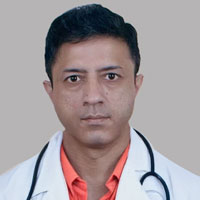
Dr. Galla Murali Mohan
MBBS, MS-General Surgery
34 Years Experience Overall
Last Updated : April 29, 2026

What Our Patients Say

  • MM

    Midhun M Nair, 34 Yrs

    verified
    5/5

    I chose laser circumcision because of minimal pain, and it was the right decision. The procedure was quick, and recovery was smooth.

    City : Thiruvananthapuram
    Treated by : Dr. Shammy SS
  • ST

    Sarang Tiwari

    verified
    5/5

    Doctor ne sab doubts patiently clear kiye, isliye confidence aa gaya surgery ke liye. mein apni surgery se satisfying hun

    City : Lucknow
    Treated by : Dr. Amit Kumar
  • KP

    Kuldeep pandey

    verified
    5/5

    Laser method ki wajah se procedure controlled aur safe laga. Koi problem nahi aai.

    City : Lucknow
    Treated by : Dr. Amit Kumar
  • KR

    Krishna Raut

    verified
    5/5

    Treatment ka experience positive tha. Doctor ne achhe se handle kiya.

    City : Kozhikode
    Treated by : Dr. Sabin Irfan C P
  • GJ

    Georgy Jeeson

    verified
    5/5

    Laser circumcision bilkul safe aur painless laga. Surgery ke baad zyada discomfort nahi hua.

    City : Kochi
  • KV

    Karam Veer Singh

    verified
    5/5

    Dr. Amit is a gem of a person with great expertise and very nice treatment

    City : Lucknow
    Treated by : Dr. Amit Kumar