Select City

Call Us
Book FREE Appointment
The size of the kidney stone is an important factor that determines the severity of the symptoms and the complications it may cause. Therefore, during diagnosis, doctors leave no ‘stone’ unturned when it comes to determining the size of the kidney stone. We’ll discuss the different sizes of stones, the difference the stone’s size can make, and the treatment of stones based on their size.
The size of the kidney stone is an important factor that determines the ...severity of the symptoms and the complications it may cause. Therefore, during diagnosis, doctors leave no ‘stone’ unturned when it comes to determining the size of the kidney stone. We’ll discuss the different sizes of stones, the difference the stone’s size can make, and the treatment of stones based on their size. Read More




3M+
Happy Patients
50+
Disease
200+
Hospitals
30+
Cities

Free Cab Facility

No-Cost EMI

Support in Insurance Claim

1-day Hospitalization

USFDA-Approved Procedure
Choose Your City
It help us to find the best doctors near you.

Bangalore
Delhi
Gurgaon
Hyderabad
Mumbai
Pune
Delhi
Hyderabad
Pune
Mumbai
Bangalore
 Doctor Not Found
4.5/5
29 Years Experience
 Pristyn Care ZOI Hospital, Ameerpet, Hyderabad
4.5/5
19 Years Experience
Pristyn Care Sheetla Hospital, Sector 8, Gurgaon4.5/5
15 Years Experience
Pristyn Care ZOI Hospital, Ameerpet, Hyderabad4.5/5
12 Years Experience
Pristyn Care ZOI Hospital, Ameerpet, Hyderabad| Kidney Stone Size Chart in MM | Chances of Passing Naturally | Treatment |
| Less than 2 mm Kidney Stone | 80% | Home remedies |
| 2 – 4 mm Kidney Stone | 80% | Home remedies, medication |
| 4- 10 mm Kidney Stone | 60% | Home remedies, medication, medical procedures (ESWL or Ureteroscopy) |
| Larger than 10 mm Kidney Stone | 20% | Surgery (URSL, RIRS, PCNL) |
Free Kidney Stones Surgery Cost Calculator
Fill details to get actual cost
Here are the different sizes of kidney stones that have a chance to pass naturally.
| Kidney Stone Size | Chances of passing naturally (in %) |
| <2 mm Kidney Stone | Almost 85% |
| 2 -4 mm Kidney Stone | Almost 80% |
| 4 mm Kidney Stone | Almost 80% |
| 4 – 7 mm Kidney Stone | Almost 60% |
| Larger than 7 mm Kidney Stone | Almost 30% |
| 1 -2 cm Kidney Stone | Cannot be passed naturally |
| 2 cm or above Kidney Stone | Cannot be passed naturally |
4 mm stone in kidney generally pass through the system on their own. On top of that, they cause mild to no symptoms. Increasing your fluid intake, limiting your caffeine intake, consuming high-fiber foods, limiting salt intake, and avoiding processed foods can help with the treatment of stones less than 4 mm in size.
Medium-sized 4 mm stone in kidney to 10 mm can be treated through home remedies and conservative methods such as medication (alpha-blockers and painkillers). However, in complex cases, when the stones don’t respond to conservative treatment, the doctors may suggest some medical procedures or minimally-invasive surgeries. These may include:

Diet & Lifestyle Consultation

Post-Surgery Follow-Up

Free Cab Facility

24*7 Patient Support
Treatment for large-sized kidney stones (10 mm stone in kidney or more) typically includes surgery. Some common surgeries include:
The symptoms of kidney stones of different sizes are more or less the same. However, the intensity of these symptoms can differ.
Pristyn Care aces the surgical scene in the country and provides top-notch surgical care for kidney stones of different sizes. Our doctors are adept in providing treatment for small, medium, and large kidney stones, and chalk out a specialized treatment plan for all patients. They perform a thorough diagnosis to determine the location and size of the kidney stone before suggesting treatment. We have partnered with the best hospitals in the country, which offer state-of-the-art infrastructure and world-class facilities to ensure top-notch patient care. Here are some factors that make Pristyn Care one of the best healthcare facilities for kidney stones treatment in India:
During the diagnostic procedure, your doctor will pay attention to the size of the stone, and now you know why. Knowing the exact size of the stone helps doctors chalk out the most appropriate treatment plan, and ensure that the stone is completely removed during the process. It also helps determine whether or not invasive treatments are required. To avail of quality treatment for kidney stone removal, reach out to Pristyn Care, and book your consultation with our expert urologists.
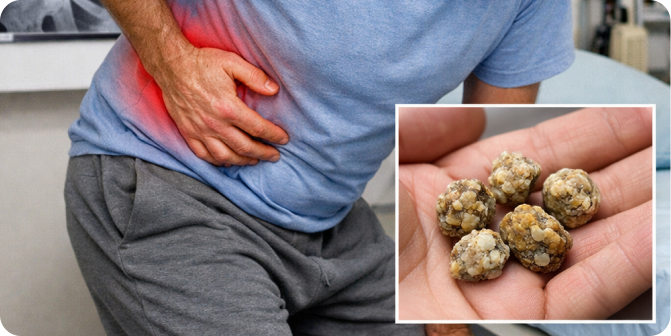
Yes. Kidney stones can vary significantly in terms of their size. They can be as small as the size of a grain of sand grain and as big as the size of a golf ball. Several factors can cause the size of kidney stones to increase, including consuming too much salt, having a high body mass index (BMI), and weight gain. The size of the stone contributes significantly to the symptoms you’ll experience, along with the treatment you’ll receive, which will further be discussed.
After the formation of a kidney stone, the treatment is decided based on, most importantly, its size. The tube that moves urine from your kidney to your bladder is called the ureter. The average ureter has an internal diameter of just 3mm to 4mm. Stones that are smaller in size can pass easily through the ureter, with little to no discomfort.
The size of the stone can play a major role in determining the symptoms you’ll experience, and how severe they’ll be. Small stones generally exhibit less severe symptoms compared to larger stones. Additionally, doctors can not plan the treatment unless they’re clear about the size of the stone.
Kidney stones 8 mm or larger usually require surgery or a medical procedure, as they rarely pass naturally through urine.
Yes. Stones smaller than 6 mm have a higher chance of passing naturally through urine with fluids and medication.
Yes. Kidney stones can grow over time, making treatment more complex and increasing the risk of kidney damage.



 JK
JKJaya krushna nayak, 31 Yrs

 Recommends
Recommends
Good behaviour
.svg) SR
SRsashi rekha
Recommends
Recommends
Best place best staff experience very happy
.svg) DH
DHDhanesh, 30 Yrs
Recommends
Recommends
Treatment se pehle pain unbearable tha, ab kaafi relief hai. Overall experience achha raha.
VIVignesh
Recommends
Recommends
Stone problem ke liye aaya tha, pehle bahut pain hota tha. Ab treatment ke baad condition kaafi better hai
HHarsh Verma Rana
Recommends
Recommends
Exceptional PCNL treatment at Pristyn Care, Indore. highly experienced surgeon and the support staff was friendly.
SKSikander Kumar
Recommends
Recommends
Very happy with Pristyn assistance and support, Well trained doctor staffs
.svg)
Avail FREE Doctor Consultation

Untreated Kidney Stones can cause severe pain, infection, or kidney damage.

Kidney Stones can block urine flow & cause intense pain
Delay may lead to infection, fever, or kidney damage
Early treatment prevents emergency procedures

Ignoring Kidney Stone symptoms may lead to serious complications

Takes less than 10 seconds • No spam • 100% confidential

120Cr—Patient Savings Delivered
so patients focus on recovery, not bills.

Complete Transparency
No hidden charges or surprise bills

End-to-End Insurance Handling
Complete insurance processing support

Up to 20% Savings on Every Surgery
powered by smarter insurance handling

Easy EMI Options
Flexible payment plans available
120Cr—Patient Savings Delivered
so patients focus on recovery, not bills.
Complete Transparency
No hidden charges or surprise bills
Your Form Has Been Submitted Successfully.
Our care coordinator will call you shortly.


Book Your FREE Consultation
Consult with our expert surgeon for more than 50+ diseases

Once you share your details, our care coordinator will get in touch with you.

The coordinator will understand your symptoms and health condition in detail.

Your consultation will be scheduled at the earliest.
3M +
Happy Patients
150 +
Clinics
30 +
Cities